
Wisconsin Non-Owner SR-22 Premium Range by Suspension Cause
Get My Non-Owner SR-22 QuoteWhy Wisconsin Non-Owner SR-22 Premiums Split by Suspension Cause
Wisconsin non-owner SR-22 premiums range from $45/month to $140/month depending on the suspension trigger that created the filing requirement. OWI-related administrative suspensions under Wis. Stat. § 343.305 generate the highest non-owner SR-22 premiums because carriers treat implied-consent refusal or BAC-over-limit administrative actions as high-severity risk markers. Uninsured-driving suspensions under Wis. Stat. § 344.64 generate mid-tier premiums because the violation signals financial irresponsibility rather than impairment risk. Point-accumulation suspensions without OWI history generate the lowest non-owner SR-22 premiums because the underlying violation pattern does not imply DUI exposure.
Carriers writing non-owner SR-22 in Wisconsin underwrite administrative suspension cases more aggressively than judicial suspension cases for procedural reasons. An administrative OWI suspension takes effect 30 days after notice under Wis. Stat. § 343.305, meaning the carrier is pricing the policy before any criminal conviction appears on record. Judicial suspensions arrive after conviction, giving the carrier a fuller MVR picture. Administrative cases carry higher uncertainty, which drives higher premiums even when the final conviction matches the administrative trigger.
The three-year SR-22 filing requirement mandated by Wisconsin DOT for OWI-related reinstatements extends the premium impact. A driver paying $110/month for non-owner SR-22 over 36 months spends $3,960 in total premium costs. A driver on an uninsured-violation non-owner SR-22 policy at $60/month over 24 months spends $1,440. The cause determines not just the monthly rate but the filing period length, which Wisconsin statutes tie directly to the suspension trigger.

Wisconsin Non-Owner SR-22 Premium Ranges by Suspension Trigger
OWI administrative suspension (first offense, BAC 0.08+ or refusal): $70-$140/month. Carriers include Dairyland, Progressive, The General, GAINSCO, and Bristol West. The $60 Wisconsin reinstatement fee applies after the suspension period ends, separate from premium costs. The occupational license option under Wis. Stat. § 343.10 allows restricted driving during the suspension if the court grants the petition, but the non-owner SR-22 policy must remain active throughout the filing period to avoid revocation.
OWI judicial suspension (post-conviction, second or subsequent offense): $95-$140/month. Second-offense OWI cases face a 90-day hard suspension before occupational license eligibility per Wis. Stat. § 343.10(5)(b), and ignition interlock device installation becomes mandatory under Wis. Stat. § 343.301. Non-owner SR-22 premiums in IID-required cases rise because the carrier must verify IID installation before filing. Carriers writing this segment are limited to Dairyland, The General, and GAINSCO.
Uninsured-driving suspension (Wis. Stat. § 344.64 violation): $45-$85/month. Wisconsin's electronic insurance verification system reports policy cancellations to WisDOT, which triggers registration and operating privilege suspension. The SR-22 filing requirement restores eligibility after the $60 reinstatement fee is paid. Carriers include Progressive, Geico, National General, Dairyland, and Bristol West. This segment generates the lowest non-owner SR-22 premiums because the violation does not signal impairment risk.
Point-accumulation suspension (12 points in 12 months): $50-$95/month. Wisconsin does not always require SR-22 filing for point-based suspensions unless the underlying violations included uninsured operation or the court imposed SR-22 as a condition of reinstatement. When SR-22 is required, carriers price point-based cases below OWI cases but above clean-record non-owner policies. Geico, Progressive, and State Farm write this segment selectively.
What Wisconsin Non-Owner SR-22 Covers and What It Does Not
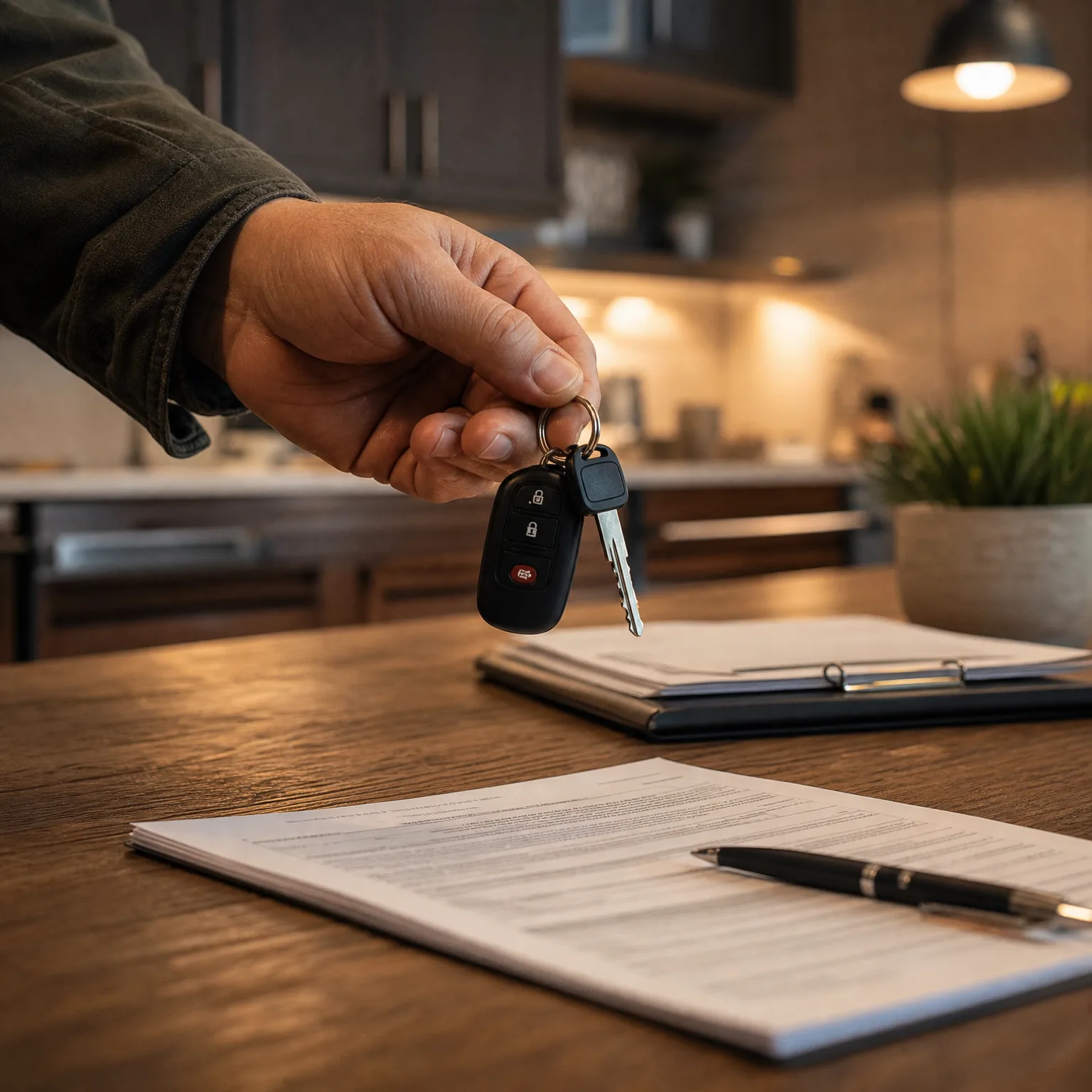
Wisconsin non-owner SR-22 policies provide liability coverage when the named insured drives a vehicle they do not own with the owner's permission. The policy satisfies Wisconsin's $25,000 bodily injury per person / $50,000 per accident / $10,000 property damage minimum liability requirements and includes the SR-22 filing the carrier submits to Wisconsin DOT on the policyholder's behalf. The filing confirms continuous coverage throughout the suspension period.
Non-owner SR-22 does not cover any vehicle the policyholder owns or regularly uses. If the driver acquires a vehicle during the filing period, they must convert to an owner SR-22 policy or stack coverage. The carrier will not file SR-22 for a newly acquired vehicle under a non-owner policy. Non-owner SR-22 also does not provide comprehensive or collision coverage because no specific vehicle is insured. The policyholder remains liable for damage to the borrowed vehicle unless the owner's policy covers permissive use.
Wisconsin requires uninsured motorist coverage on all auto policies per state law, including non-owner SR-22 policies. This coverage protects the policyholder when injured by an at-fault driver without insurance or with insufficient limits. The uninsured motorist requirement adds $8-$15/month to non-owner SR-22 premiums compared to states where it is optional.
How the Filing Period Length Multiplies Total Cost
Wisconsin DOT sets SR-22 filing period length by suspension cause. OWI-related reinstatements require three years of continuous SR-22 filing measured from the conviction date. Uninsured-driving suspensions typically require two years of SR-22 filing. Point-based suspensions with SR-22 conditions vary by court order but generally require one to two years.
The filing period does not begin until the reinstatement fee is paid and the SR-22 certificate is filed with Wisconsin DOT. If the driver obtains an occupational license during the suspension, the SR-22 filing period overlaps the restricted-driving period but does not end when the occupational license expires. The full filing period runs regardless of whether the driver holds a full license or a restricted license during that time.
Lapse consequences reset the clock. If the non-owner SR-22 policy lapses for any reason during the filing period, the carrier electronically notifies Wisconsin DOT within 10 days. Wisconsin suspends the driver's operating privilege immediately and the filing period resets from zero once a new SR-22 certificate is filed and the reinstatement process is completed. A driver three months from completing a three-year OWI filing requirement who lets coverage lapse must restart the full three-year period after reinstatement.

Cover Your Filing Before You Own a Car Again
Get My Non-Owner SR-22 Quote
Which Carriers Write Wisconsin Non-Owner SR-22 and How to Compare
Dairyland, Progressive, The General, GAINSCO, and Bristol West write non-owner SR-22 in Wisconsin across all suspension causes. Geico writes non-owner SR-22 for uninsured-driving and point-based suspensions but declines most OWI administrative suspension cases. State Farm writes non-owner SR-22 selectively for existing customers with clean prior history before the suspension. National General writes uninsured-driving non-owner SR-22 but requires broker submission for OWI cases.
Carriers quote non-owner SR-22 premiums based on the suspension cause, the driver's age, the county of residence, and the filing period length. A 32-year-old Milwaukee County driver with a first-offense OWI administrative suspension receives higher quotes than a 32-year-old Dane County driver with an uninsured-driving suspension even when both request identical liability limits. The suspension cause is the primary pricing variable, followed by geographic risk factors tied to accident frequency and uninsured motorist rates in the county.
Online quoting tools work for uninsured-driving and point-based non-owner SR-22 cases. OWI-related non-owner SR-22 cases often require broker submission because carriers manually underwrite administrative suspension cases before binding coverage. Brokers licensed in Wisconsin with non-standard carrier appointments can submit to multiple carriers simultaneously, which compresses the quote comparison process to 24-48 hours instead of the week-long process drivers face when quoting individually.

Occupational License Interaction and Coverage Requirements
Wisconsin occupational licenses granted under Wis. Stat. § 343.10 allow court-defined restricted driving during the suspension period. The court sets the specific hours, purposes, and routes the driver may use. Common restrictions limit driving to work, school, medical appointments, church, and alcohol/drug treatment programs for a maximum of 12 hours per day and 60 hours per week.
SR-22 filing is a universal requirement for obtaining an occupational license regardless of the suspension cause. The court petition requires proof of SR-22 filing before the occupational license order is granted. Non-owner SR-22 satisfies this requirement when the driver does not own a vehicle. The carrier files Form SR-22 with Wisconsin DOT, and the driver submits a copy of the SR-22 certificate to the circuit court as part of the occupational license application.
The occupational license does not reduce the SR-22 filing period. A driver with a three-year OWI SR-22 requirement who holds an occupational license for the first 18 months and a full license for the remaining 18 months must maintain SR-22 coverage continuously for the full three years. The filing requirement survives the occupational license period and continues until the full term expires.
What Happens When a Carless Filer Acquires a Vehicle Mid-Filing
If a Wisconsin non-owner SR-22 policyholder acquires a vehicle during the filing period, the non-owner policy immediately becomes inadequate. The driver must convert to an owner SR-22 policy that covers the newly acquired vehicle or the carrier will not file SR-22 for that vehicle. Wisconsin DOT requires SR-22 filing to reflect actual vehicle ownership and use.
The conversion triggers re-underwriting and a premium increase. Non-owner SR-22 premiums range from $45-$140/month because no specific vehicle is covered and no comprehensive or collision exposure exists. Owner SR-22 premiums for the same driver covering a 2015 Honda Civic range from $120-$280/month because the carrier now covers liability, comprehensive, and collision exposure tied to a specific vehicle with a specific value and theft risk profile.
Some drivers attempt to maintain the non-owner SR-22 policy and purchase a separate owner policy without SR-22 filing to avoid the premium increase. Wisconsin DOT treats this as a filing lapse. The SR-22 certificate must be filed on the policy covering the vehicle the driver actually owns and operates. Stacking a non-owner SR-22 policy and a separate owner policy without SR-22 filing does not satisfy the filing requirement and will result in suspension.
Frequently Asked Questions
Does Wisconsin require non-owner SR-22 for uninsured-driving suspensions?
Yes. Wisconsin Stat. § 344.64 suspensions for uninsured operation require SR-22 filing before reinstatement. Non-owner SR-22 satisfies this requirement when the driver does not own a vehicle. The filing period typically runs two years from the reinstatement date.
Can I get a Wisconsin occupational license with non-owner SR-22?
Yes. Wisconsin circuit courts accept non-owner SR-22 filing as proof of financial responsibility when granting occupational licenses under Wis. Stat. § 343.10. The SR-22 certificate must be filed with Wisconsin DOT and submitted to the court as part of the occupational license petition.
What happens if my Wisconsin non-owner SR-22 policy lapses?
The carrier electronically notifies Wisconsin DOT within 10 days. Wisconsin suspends your operating privilege immediately and the SR-22 filing period resets from zero once a new SR-22 certificate is filed and the $60 reinstatement fee is paid again.
Do Wisconsin OWI cases require three years of non-owner SR-22?
Yes. Wisconsin DOT requires three years of continuous SR-22 filing for OWI-related reinstatements measured from the conviction date. The filing period does not begin until the reinstatement fee is paid and the SR-22 certificate is filed.
Can I switch from non-owner SR-22 to owner SR-22 mid-filing in Wisconsin?
Yes. If you acquire a vehicle during the filing period, you must convert to an owner SR-22 policy covering that vehicle. The carrier will cancel the non-owner policy and issue a new SR-22 certificate on the owner policy without resetting the filing period clock.
Which Wisconsin carriers write non-owner SR-22 for OWI suspensions?
Dairyland, The General, GAINSCO, Progressive, and Bristol West write non-owner SR-22 for OWI-related suspensions in Wisconsin. Premiums range from $70-$140/month depending on whether the suspension is administrative or judicial and whether ignition interlock is required.
Related Articles

Wisconsin Non-Owner SR-22: Court Path & Premium Range
5/19/2026

WI Non-Owner SR-22 vs Owner SR-22: Cost Comparison
5/19/2026

WI Non-Owner SR-22 vs Owner: When Non-Owner Fits
5/19/2026

Wisconsin Non-Owner SR-22 by Cause: DUI, Uninsured, More
5/19/2026

Iowa Non-Owner SR-22 Cost by Cause: OWI, Points, Uninsured
5/19/2026

Wyoming Non-Owner SR-22 Cost by Cause | Monthly Premiums
5/19/2026