
Wisconsin Non-Owner SR-22: Court Path, Premium Range, Carriers
Get My Non-Owner SR-22 QuoteWhy Non-Owner SR-22 Fits Wisconsin's Occupational License Process
Wisconsin circuit courts issue occupational license orders. WisDOT Division of Motor Vehicles issues the physical license document. You cannot get the physical license without presenting the court order to DMV first. You cannot get the court order without presenting proof of SR-22 filing to the judge.
If you do not currently own a vehicle—because your car was impounded after your OWI arrest, you sold it to cut costs during suspension, or you never owned one to begin with—you need non-owner SR-22 insurance. This policy provides liability coverage when you drive someone else's vehicle with permission. The carrier files Form SR-22 with WisDOT on your behalf. The court accepts non-owner SR-22 filings as proof of financial responsibility under Wis. Stat. § 344.62.
Non-owner policies cost 40–60% less than owner SR-22 policies because there is no comprehensive or collision coverage and no specific vehicle to insure. Monthly premiums for non-owner SR-22 in Wisconsin typically range $55–$95/month for drivers with single OWI suspensions. Second or subsequent OWI offenses, or stacked causes like DWLS plus OWI, push that range to $85–$130/month. Estimates reflect industry averages; your quote depends on county, age, and driving history severity.
How Wisconsin's Two-Step Occupational License System Works
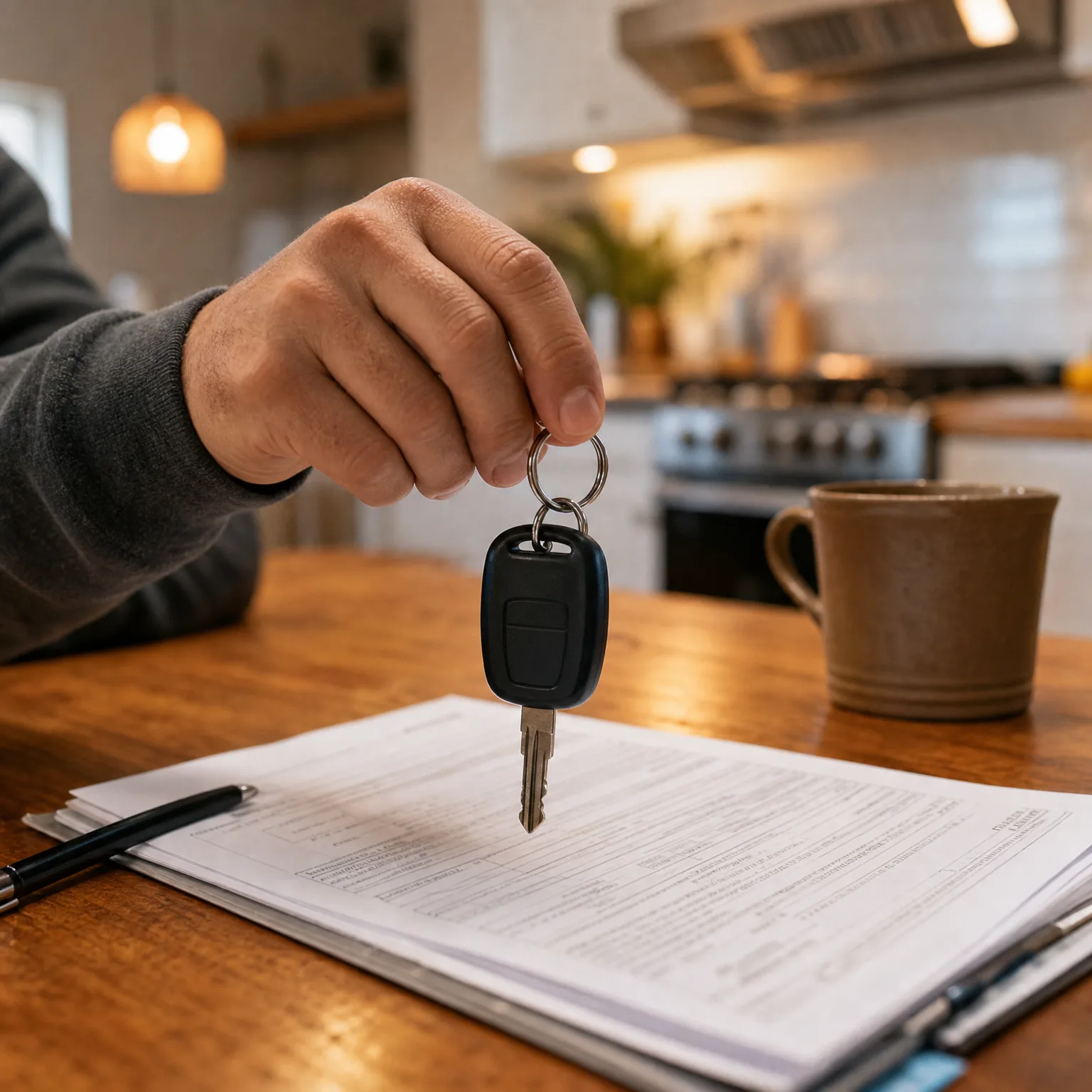
Wisconsin does not use a DMV-administered hardship license application. You petition the circuit court in the county where you reside. The court evaluates your petition, reviews your documentation, and issues an order defining your driving hours, purposes, and routes. You then take that court order to a WisDOT DMV service center to receive the physical occupational license.
The petition requires proof of employment or essential need (work, school, medical appointments, church, AODA treatment), proof of SR-22 insurance filing, a completed application form, and payment of the court filing fee. The court sets your driving schedule—maximum 12 hours per day and 60 hours per week under current practice, though some courts impose tighter restrictions. Routes are court-defined, not DMV-defined. If you deviate from the court-defined purposes or hours, your occupational license can be revoked and the underlying suspension period extended.
SR-22 filing is required before the petition hearing, not after. Most drivers prepare their employment letter and application form first, then realize the judge will not approve the petition without proof of insurance already in place. Non-owner SR-22 insurance can be purchased and filed within 24 hours through most non-standard carriers. You bring the SR-22 filing confirmation (either the paper certificate or carrier email confirmation showing electronic filing to WisDOT) to your hearing.
OWI-Specific Filing Requirements and Ignition Interlock
OWI-related suspensions in Wisconsin trigger mandatory SR-22 filing for three years from reinstatement date under Wis. Stat. § 343.305 and § 344.62. The clock resets if your coverage lapses. A single day without active SR-22 on file triggers a new suspension notice from WisDOT, and you must restart the three-year period from the date you cure the lapse.
First-offense OWI suspensions carry a 30-day hard suspension period before occupational license eligibility. Second or subsequent OWI offenses within 10 years carry a 90-day hard suspension under Wis. Stat. § 343.10(5)(b). You cannot petition for an occupational license until that hard period expires. Ignition interlock device installation is mandatory for most OWI-related occupational licenses. The court order will specify IID installation as a condition. IID costs are separate from SR-22 premiums—expect $75–$150/month for device lease and monthly calibration.
Non-owner SR-22 covers your liability when you drive someone else's vehicle. It does not eliminate the IID requirement. If the court mandates IID, you must install the device in any vehicle you drive, even borrowed vehicles. Some courts require proof of IID installation before issuing the occupational license order. Coordinate with your IID provider and carrier before your petition hearing.
Which Carriers Write Non-Owner SR-22 in Wisconsin
Progressive writes non-owner SR-22 policies in Wisconsin through its non-standard division. GEICO offers non-owner coverage with SR-22 filing capability statewide. The General specializes in high-risk filings and writes non-owner policies for drivers with multiple OWI offenses or stacked suspensions. Dairyland, based in Wisconsin, writes non-owner SR-22 across all counties and files electronically with WisDOT same-day in most cases. Bristol West and GAINSCO both operate in Wisconsin and write non-owner policies for suspended drivers.
State Farm writes SR-22 filings in Wisconsin but does not offer non-owner policies through all agents—call your local agent directly to confirm availability. Most preferred-tier carriers (Allstate, American Family, Auto-Owners) do not write non-owner policies for suspended drivers; they serve standard-risk insured drivers only.
Quote at least three carriers. Non-owner SR-22 premiums vary by 30–50% between carriers for the same driver profile. Progressive may quote $68/month while The General quotes $105/month for an identical risk. Premium differences reflect each carrier's appetite for high-risk filings and their county-specific loss experience. Wisconsin counties with higher OWI conviction rates (Dane, Milwaukee, Brown) see modestly higher premiums than rural northern counties.

Cover Your Filing Before You Own a Car Again
Get My Non-Owner SR-22 Quote
What Non-Owner SR-22 Covers and What It Does Not
Non-owner SR-22 provides liability coverage when you drive a vehicle you do not own. Wisconsin requires minimum liability limits of $25,000 bodily injury per person, $50,000 bodily injury per accident, and $10,000 property damage. Most non-owner policies offer these state minimums by default. You can purchase higher limits—50/100/25 or 100/300/100—at slightly higher premiums, typically $10–$25/month more.
The policy does not cover damage to the vehicle you are driving. It does not cover your own injuries. It covers liability claims filed against you by other drivers, passengers, or property owners when you cause an accident while driving someone else's vehicle with permission. If you borrow your employer's vehicle to drive to a job site under your occupational license, and you rear-end another car, your non-owner SR-22 policy pays the other driver's medical bills and vehicle repair costs up to your policy limits.
Non-owner SR-22 does not cover any vehicle you own, lease, or have regular access to. If you live with a family member who owns a car and you drive that car regularly, the policy will not cover accidents in that vehicle. If you purchase or are gifted a vehicle during your filing period, you must convert to a standard owner SR-22 policy immediately. Driving an owned vehicle under a non-owner policy voids coverage. Most carriers will cancel the policy retroactively and refuse to file SR-22 on your behalf if they discover you own a vehicle.

How to Get Your SR-22 Filed Before Court Petition
Contact a carrier that writes non-owner SR-22 in Wisconsin. Provide your driver's license number, suspension notice details, court petition date, and payment method. The carrier issues the policy and files Form SR-22 electronically with WisDOT Division of Motor Vehicles the same day in most cases. WisDOT updates its internal system within 24–48 hours. You receive a filing confirmation from the carrier—either a paper SR-22 certificate mailed to you or an email confirmation showing electronic filing.
Bring that filing confirmation to your occupational license petition hearing. The judge will ask for proof of insurance as part of the documentation review. Some courts accept the carrier email confirmation; others require the paper SR-22 certificate. Call the circuit court clerk's office before your hearing to confirm which format they prefer. If you show up without proof of SR-22 filing, the judge will continue your hearing and you will wait another 2–4 weeks for a new court date.
The $60 WisDOT reinstatement fee is separate from the SR-22 filing. You pay that fee after your suspension ends, not before the occupational license petition. If you have multiple concurrent suspensions—for example, an OWI suspension plus a separate financial responsibility suspension—Wisconsin assesses a separate $60 reinstatement fee for each action. Total reinstatement costs can exceed $120 if multiple causes stack.
What Happens If You Acquire a Vehicle During Filing
Non-owner SR-22 stops covering you the moment you own a vehicle. If you buy a car, inherit a vehicle, or are added as a titled owner during your three-year SR-22 filing period, you must notify your carrier immediately and convert to a standard owner SR-22 policy. The carrier will cancel your non-owner policy and issue a new owner policy with comprehensive and collision coverage options.
Premiums will increase. Owner SR-22 policies cost 60–120% more than non-owner policies because the carrier now insures a specific vehicle against physical damage risk. Expect monthly premiums to jump from $75/month to $140–$190/month depending on the vehicle year, make, and your county. The carrier files a new SR-22 with WisDOT reflecting the policy change. Your three-year filing period does not reset—it continues from the original start date.
If you drive an owned vehicle under a non-owner policy without notifying the carrier, and you are involved in an accident, the carrier will deny the claim and cancel your policy retroactively. WisDOT will receive a cancellation notice. Your occupational license will be revoked and your underlying suspension period extended. Do not risk it. Call your carrier the day you take title to a vehicle.
Frequently Asked Questions
Can I get an occupational license in Wisconsin without SR-22 insurance?
No. Wisconsin circuit courts require proof of SR-22 filing before they will approve an occupational license petition. You must purchase SR-22 insurance and present the filing confirmation at your court hearing. Non-owner SR-22 satisfies this requirement if you do not own a vehicle.
How long does SR-22 filing last after an OWI in Wisconsin?
Wisconsin requires SR-22 filing for three years following OWI-related reinstatement. The three-year period begins on your reinstatement date, not your conviction date. If your coverage lapses for any reason, the clock resets and you start a new three-year filing period from the date you cure the lapse.
What is the difference between non-owner SR-22 and owner SR-22 in Wisconsin?
Non-owner SR-22 provides liability coverage when you drive someone else's vehicle with permission. It costs 40–60% less than owner SR-22 because there is no comprehensive or collision coverage and no specific vehicle insured. Owner SR-22 covers a vehicle you own or lease and includes physical damage coverage options.
Which carriers in Wisconsin write non-owner SR-22 for OWI suspensions?
Progressive, GEICO, The General, Dairyland, Bristol West, and GAINSCO all write non-owner SR-22 policies for Wisconsin drivers with OWI suspensions. State Farm writes SR-22 filings but does not offer non-owner policies through all agents. Quote at least three carriers to compare premiums.
Do I need ignition interlock if I have non-owner SR-22 in Wisconsin?
Yes, if the court orders it. Non-owner SR-22 satisfies the insurance filing requirement, but it does not eliminate ignition interlock device requirements for OWI-related occupational licenses. You must install IID in any vehicle you drive, including borrowed vehicles, if the court mandates it.
What happens if I buy a car during my SR-22 filing period in Wisconsin?
You must notify your carrier immediately and convert to a standard owner SR-22 policy. Non-owner SR-22 does not cover vehicles you own. Driving an owned vehicle under a non-owner policy voids coverage, and the carrier will cancel your policy and notify WisDOT, which revokes your occupational license.
How much does non-owner SR-22 cost in Wisconsin after an OWI?
Monthly premiums typically range $55–$95/month for single OWI suspensions and $85–$130/month for second or subsequent OWI offenses. Costs vary by county, age, and driving history severity. Non-owner policies cost 40–60% less than owner SR-22 policies because there is no vehicle to insure.
Related Articles

WI Non-Owner SR-22 vs Owner SR-22: Cost Comparison
5/19/2026
WI Non-Owner SR-22 vs Owner: When Non-Owner Fits
5/19/2026
WI Non-Owner SR-22 Cost by Cause: OWI vs Uninsured
5/19/2026
Non-Owner SR-22 for Wisconsin OL Petitions
5/29/2026

Wisconsin Non-Owner to Owner SR-22 Conversion Guide
5/19/2026

Wisconsin Non-Owner SR-22 by Cause: DUI, Uninsured, More
5/19/2026