
South Dakota Non-Owner SR-22 Premium Range by Violation Cause
Get My Non-Owner SR-22 QuoteWhy South Dakota Non-Owner SR-22 Cost Splits Sharply by Cause Code
South Dakota Division of Motor Vehicles encodes every SR-22 filing with the suspension cause that triggered the requirement. That cause code — DUI, uninsured accident, habitual traffic offender, or refusal under implied consent law — determines which carrier tier will write non-owner SR-22 coverage and what monthly premium range applies.
DUI-cause filers face the widest carrier exclusion. South Dakota law requires ignition interlock device installation as a condition of any restricted driving privilege granted by the circuit court following DUI suspension. Non-owner SR-22 policies provide liability coverage when you drive someone else's vehicle with permission, but IID installation requires a named vehicle on the certificate. Most standard-tier carriers writing non-owner SR-22 in South Dakota — State Farm, Geico, Progressive — do not write non-owner policies that satisfy IID compliance simultaneously. That forces DUI filers into the non-standard tier exclusively: Dairyland, Bristol West, The General, and National General.
Uninsured-accident filers and habitual-offender filers without a DUI component access both standard and non-standard tiers. Geico and Progressive write non-owner SR-22 for these causes statewide. State Farm writes selectively by county and underwriting discretion. Monthly premiums for non-DUI causes typically run $85–$140 for clean-record drivers in non-metropolitan counties. DUI filers pay $190–$280 monthly because non-standard carriers price the violation history, not just the filing requirement.
The cause code also determines filing duration. DUI-related SR-22 filing in South Dakota runs 3 years from reinstatement date under SDCL 32-23 series. Uninsured-accident SR-22 typically runs 3 years as well. Points-accumulation habitual offender revocations may trigger shorter filing periods if no DUI is involved, but the SD DMV does not publish a universal filing-duration chart — you confirm duration by requesting your suspension notice or calling Driver Licensing at 605-773-6883.
What Non-Owner SR-22 Covers When You Don't Own a Vehicle
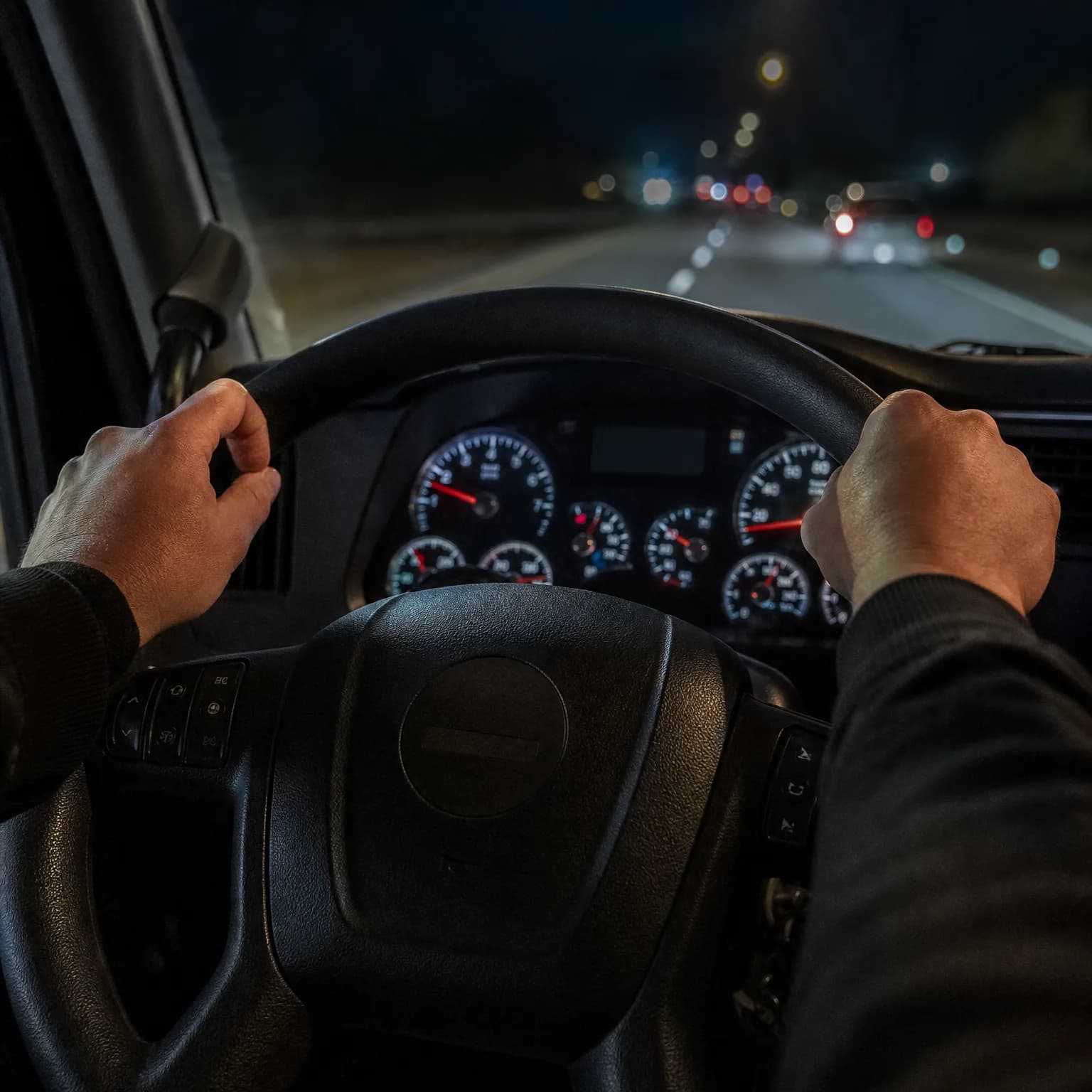
Non-owner SR-22 provides liability coverage — bodily injury and property damage — when you drive a vehicle you do not own. The policy names you as the insured but does not list a specific vehicle on the declarations page. When you borrow a car, the owner's policy typically covers the vehicle first (primary coverage), and your non-owner policy provides excess liability if the borrowed vehicle's limits are exhausted in an at-fault accident.
South Dakota requires minimum liability limits of $25,000 per person bodily injury, $50,000 per accident bodily injury, and $25,000 property damage (25/50/25). Non-owner SR-22 policies sold in South Dakota meet or exceed these minimums. Many carriers offer 50/100/50 or 100/300/100 non-owner policies at modestly higher premiums — $15–$30 more per month — which provide stronger protection if you cause a serious accident while driving a borrowed vehicle.
Non-owner SR-22 does NOT cover any vehicle you own, lease, or have regular access to. If your household has a vehicle titled to a family member and you drive it regularly, non-owner SR-22 is not the correct product. You need standard owner SR-22 on that vehicle. If you acquire a vehicle during the SR-22 filing period — by purchase, gift, or inheritance — you must convert to owner SR-22 within 30 days or your carrier will cancel the non-owner policy for material misrepresentation. South Dakota DMV receives electronic cancellation notices from carriers; a lapse in SR-22 filing during your required filing period triggers automatic re-suspension and a new $50 reinstatement fee.
How Circuit Court Hardship Petitions Complicate Non-Owner SR-22 Filing
South Dakota does not operate a DMV-administered hardship license program. Restricted driving privileges following suspension are granted exclusively by the circuit court under SDCL 32-12-53. The petition process requires proof of essential need — typically employment, medical appointments, or education — and documentation that you have obtained SR-22 insurance before the court hearing.
DUI filers face a mandatory 30-day hard suspension before restricted privileges can be petitioned. During that 30 days, you cannot drive at all, even with non-owner SR-22 in place. The circuit court has discretion to deny petitions if the judge determines the driving privilege poses unacceptable public risk or if you have not completed required DUI education classes. First-offense DUI petitions are routinely granted with narrow route and time restrictions; second-offense petitions face higher denial rates.
The hardship petition complicates non-owner SR-22 because the circuit court may require an employer affidavit confirming work schedule and route, proof of enrollment in DUI education classes, and an ignition interlock device installation certificate before granting the restricted license. IID installation requires a named vehicle. If you do not own a vehicle and your employer will not allow IID installation on a company vehicle, you cannot satisfy the court's IID condition. Most DUI filers in this position borrow a family member's vehicle long enough to install IID, obtain the installation certificate, and present it to the court. Once the restricted license is granted, you can drive other vehicles with permission under your non-owner SR-22 policy, but the IID-equipped vehicle must remain available for periodic compliance checks by the IID vendor.
Non-DUI filers — uninsured accidents, habitual traffic offender, implied consent refusal — do not face IID requirements. These petitions move faster and require less documentation. The circuit court still requires proof of SR-22 filing and proof of essential need, but employers and family members providing borrowed vehicles do not need to accommodate device installation.
Which Carriers Write Non-Owner SR-22 in South Dakota and What They Charge
Eight carriers write non-owner SR-22 in South Dakota with statewide availability. Four are standard-tier: Geico, Progressive, State Farm, and USAA (military-affiliated only). Four are non-standard: Dairyland, Bristol West, The General, and National General. DUI filers typically qualify only for the non-standard tier because of the IID complication and the violation severity.
Geico writes non-owner SR-22 for uninsured-accident and points-accumulation causes across South Dakota. Monthly premiums for clean-record filers range $90–$130 depending on county and age. Geico does not write non-owner SR-22 for DUI causes in South Dakota. Progressive writes non-owner SR-22 for DUI causes but routes those policies through their non-standard underwriting division, which prices DUI violations at $210–$270 monthly. Progressive's standard division writes non-owner SR-22 for non-DUI causes at $85–$125 monthly.
Dairyland and Bristol West specialize in high-risk non-owner SR-22 and write DUI causes statewide. Dairyland quotes $190–$250 monthly for first-offense DUI non-owner SR-22 in Sioux Falls, Rapid City, and Aberdeen. Bristol West quotes slightly higher: $220–$280 monthly. Both carriers require upfront payment of the first two months plus the $25 South Dakota SR-22 filing fee. Neither carrier offers monthly payment plans for non-owner policies — you pay semi-annually or annually in most cases.
The General writes non-owner SR-22 for DUI causes but applies a geographic surcharge in Minnehaha and Pennington counties (Sioux Falls and Rapid City metro areas) that raises premiums $30–$50 monthly above rural-county quotes. National General writes non-owner SR-22 for DUI causes with competitive pricing — $195–$260 monthly statewide — but underwrites strictly on violation history. If you have multiple DUIs or a suspended license for driving while suspended, National General declines to quote.
Estimates above are based on available carrier rate data from 2024 filings; individual premiums vary by age, violation count, county, and coverage limits selected. Non-owner SR-22 premiums are typically 30–60% lower than owner SR-22 premiums for the same cause because there is no comprehensive or collision coverage and no specific vehicle risk.

Cover Your Filing Before You Own a Car Again
Get My Non-Owner SR-22 Quote
What Happens If You Acquire a Vehicle During the Filing Period
South Dakota carriers writing non-owner SR-22 policies include a named-driver exclusion and an owned-vehicle exclusion in every policy. The owned-vehicle exclusion states that the policy provides no coverage — liability, comprehensive, collision, or otherwise — for any vehicle titled to the named insured. If you buy, inherit, or receive a gifted vehicle during your SR-22 filing period, your non-owner policy does not cover that vehicle from the moment title transfers.
You must notify your carrier within 30 days of acquiring a vehicle and convert the non-owner policy to a standard owner policy. The carrier will endorse the policy to add the vehicle, recalculate premium based on the vehicle's year, make, model, and VIN, and continue SR-22 filing without interruption. If you do not notify the carrier and continue driving the newly acquired vehicle under the non-owner policy, the carrier will cancel the policy for material misrepresentation once they discover the vehicle through DMV registration cross-checks or a claim investigation.
South Dakota DMV receives electronic cancellation notices from all carriers licensed in the state. A lapse in SR-22 filing during your required filing period — whether from cancellation, non-payment, or voluntary termination — triggers automatic re-suspension. You receive a notice of suspension by mail at your last address on file. The re-suspension remains in effect until you file new SR-22 and pay a second $50 reinstatement fee. The filing period clock does not pause; if you were six months into a three-year filing requirement when the lapse occurred, you still owe two and a half years of continuous filing after reinstatement.
If you plan to acquire a vehicle during the filing period, contact your carrier before the title transfer closes. Most carriers will process the conversion as an endorsement effective the date of acquisition, avoiding any lapse. Do not assume your non-owner policy automatically extends to a newly purchased vehicle — it does not, and the consequences of that misunderstanding include policy cancellation, re-suspension, and uncovered liability if you cause an accident.

How to Start Non-Owner SR-22 Filing Before Your Circuit Court Hearing
Most South Dakota filers purchase non-owner SR-22 coverage before petitioning the circuit court for a restricted license. The court requires proof of SR-22 filing at the hearing, and carriers can file SR-22 with the SD DMV electronically within 24–48 hours of policy purchase.
Call or quote online with Geico, Progressive, Dairyland, or Bristol West. Provide your driver's license number, the suspension cause as listed on your DMV notice, and the filing period duration if known. The carrier will quote monthly premium, confirm South Dakota SR-22 filing capability, and issue the policy immediately upon payment. Most carriers require the first month's premium plus the $25 SR-22 filing fee upfront; non-standard carriers may require two months or a full six-month term paid in advance.
Once the policy is issued, the carrier electronically transmits Form SR-22 to the South Dakota Division of Motor Vehicles. The DMV processes the filing within 24–48 hours and updates your driver record to show active SR-22 compliance. You do not receive a paper SR-22 certificate by mail in South Dakota — the filing is electronic only. Your carrier provides a copy of the filed SR-22 form for your records and for presentation to the circuit court.
Bring the SR-22 certificate copy, proof of employment or essential need, and any required education class completion certificates to your circuit court restricted license hearing. The judge reviews the documentation and issues a court order defining the scope of your restricted driving privilege — routes, hours, purposes. That court order becomes your restricted license; you carry it with you whenever driving. The SR-22 filing must remain active continuously throughout the restricted license period and for the full filing duration specified by the DMV, even after your full license is reinstated.
Total Cost Over the Filing Period for Carless South Dakota Filers
South Dakota DUI non-owner SR-22 filers pay approximately $7,500–$10,500 over the three-year filing period when premiums, filing fees, and reinstatement costs are combined. Non-DUI filers pay $3,500–$5,500 over three years. These totals assume no lapses, no additional violations, and continuous coverage with the same carrier.
Breakdown for DUI cause at $240/month non-standard carrier rate: $240 × 36 months = $8,640 in premiums. Add $25 SR-22 filing fee at policy inception, $50 reinstatement fee paid to SD DMV at the end of suspension, and approximately $800–$1,500 in ignition interlock device installation and monthly monitoring fees over the restricted license period. Total: $9,515–$10,215. This does not include DUI education class fees (typically $300–$500) or court-ordered treatment program costs.
Breakdown for uninsured-accident cause at $110/month standard carrier rate: $110 × 36 months = $3,960 in premiums. Add $25 filing fee and $50 reinstatement fee. Total: $4,035. Non-DUI filers avoid IID costs and face lower carrier premiums because the violation is less severe.
Some filers ask whether they can terminate SR-22 coverage early if they do not plan to drive during the filing period. South Dakota law does not provide an exception for non-driving filers. The SR-22 filing requirement is a condition of license reinstatement and restricted driving privileges, not a condition of actual vehicle operation. If you terminate the policy or allow it to lapse, the DMV re-suspends your license automatically. The only way to avoid SR-22 costs entirely is to wait out the suspension without petitioning for a restricted license and without reinstating your license until the filing requirement expires — a strategy that works only if you have no need to drive for employment, medical care, or family obligations.
Frequently Asked Questions
Can I get non-owner SR-22 in South Dakota if I have a DUI and no vehicle to install an ignition interlock device on?
Yes, you can purchase non-owner SR-22 from Dairyland, Bristol West, The General, or National General even without a vehicle for IID installation. However, the circuit court will not grant a restricted driving privilege until you present an IID installation certificate, which requires borrowing or accessing a vehicle for installation and periodic compliance checks. The non-owner SR-22 policy itself does not require IID, but the court-ordered restricted license does.
Does South Dakota accept out-of-state non-owner SR-22 if I move during the filing period?
No. South Dakota requires SR-22 to be filed by a carrier licensed in South Dakota and transmitted electronically to the SD Division of Motor Vehicles. If you move to another state during your South Dakota filing period, you must contact SD DMV Driver Licensing to confirm whether the filing requirement transfers or terminates. Most states do not recognize out-of-state SR-22 filings for their own reinstatement purposes.
How much does non-owner SR-22 cost in South Dakota for an uninsured accident suspension?
Non-owner SR-22 for uninsured-accident suspensions in South Dakota typically costs $85–$140 per month through standard carriers like Geico or Progressive. Over the typical three-year filing period, total premiums range $3,060–$5,040, plus a $25 SR-22 filing fee and $50 reinstatement fee. Actual cost varies by county, age, and coverage limits selected.
What happens if my non-owner SR-22 policy lapses for non-payment in South Dakota?
South Dakota DMV receives electronic cancellation notices from all carriers. A lapse in SR-22 filing during your required period triggers automatic re-suspension of your license. You must purchase new SR-22 coverage, wait for the carrier to file electronically with the DMV, and pay a second $50 reinstatement fee. The filing period clock does not pause during the lapse.
Can I drive a family member's car with non-owner SR-22 in South Dakota?
Yes. Non-owner SR-22 provides liability coverage when you drive a vehicle you do not own, including family members' vehicles, as long as you have permission and the vehicle is not titled to you or regularly assigned to you. The family member's own insurance covers the vehicle as primary; your non-owner policy provides excess liability if their limits are exhausted in an at-fault accident.
Do I need non-owner SR-22 if I'm not planning to drive during my South Dakota suspension?
Yes, if you want to reinstate your license at the end of the suspension period or petition for a restricted license during suspension. South Dakota law requires SR-22 filing as a condition of reinstatement and restricted driving privileges, not as a condition of actual vehicle operation. If you do not maintain SR-22 continuously, the DMV will not process reinstatement.
Which South Dakota carriers write non-owner SR-22 for second-offense DUI?
Dairyland, Bristol West, and The General write non-owner SR-22 for second-offense DUI in South Dakota. Premiums range $250–$320 monthly depending on time since the conviction and county. National General underwrites second-offense DUI selectively and may decline if you have additional violations. Standard carriers like Geico and Progressive do not write non-owner SR-22 for multiple DUI convictions.
Related Articles
SD Non-Owner SR-22: Cost, Carriers, and Filing Path
5/19/2026
South Dakota Non-Owner SR-22: Carriers & Filing
5/19/2026

Non-Owner SR-22 Costs in North Dakota by Cause
5/19/2026
ND Non-Owner SR-22 Cost by Cause: DUI vs Lapse Rates
5/19/2026

North Dakota Non-Owner SR-22: Cost, Carriers, Filing
5/19/2026
Non-Owner SR-22 Cost in North Dakota: Carless Filers
5/19/2026