
Non-Owner SR-22 Lapse Risk in Hawaii: How Carriers Notify DMV
Get My Non-Owner SR-22 QuoteHow Hawaii Carriers Report Non-Owner SR-22 Cancellations to County DMVs
Carriers file SR-22 cancellation notices electronically through Hawaii's insurance verification system under HRS Chapter 431. The state Motor Vehicle Safety Responsibility Act (HRS Chapter 287) requires insurers to report policy cancellations within a statutorily defined window, but the exact number of days between carrier cancellation reporting and formal state registration action is not confirmed from a canonical source.
Hawaii administers vehicle registration and driver licensing at the county level, not through a single state DMV. When your non-owner SR-22 policy cancels, the insurer reports to the state insurance division, which then coordinates with the county licensing office where your license was issued: City & County of Honolulu, Maui County, Hawaii County, or Kauai County. This multi-agency handoff adds processing time that mainland single-agency states do not face.
The practical timeline: most drivers discover their filing lapse only when they receive a county notice of registration suspension or license revocation. The window between carrier cancellation and county enforcement action is typically 10 to 21 days, but geographic isolation on neighbor islands can delay mail delivery and extend the effective notice period. If you live on a neighbor island and your license was issued through that county's office, you cannot resolve the lapse same-day in person the way Oahu residents sometimes can.

Why Non-Owner SR-22 Lapses Trigger Dual Enforcement in Hawaii
Hawaii is a no-fault auto insurance state under HRS §431:10C, which means proof of personal injury protection (PIP) coverage is required alongside liability coverage. A non-owner SR-22 policy in Hawaii must meet both the state liability minimums ($20,000 per person / $40,000 per accident for bodily injury, $10,000 for property damage) and the PIP requirement simultaneously.
When your non-owner SR-22 policy lapses, both the liability filing and the PIP filing terminate at the same time. The state treats this as a dual compliance failure: you no longer have proof of financial responsibility under the Motor Vehicle Safety Responsibility Act, and you no longer have proof of no-fault PIP coverage. This triggers enforcement on both tracks, often resulting in faster registration suspension than liability-only states impose.
Most carriers writing non-owner SR-22 in Hawaii include the PIP requirement automatically in the policy structure. If you purchase a non-owner policy from a mainland carrier unfamiliar with Hawaii's PIP mandate, the policy may not satisfy state filing requirements even if the SR-22 form itself is accepted. Progressive, Geico, and National General all write non-owner SR-22 in Hawaii with PIP built in. USAA writes non-owner SR-22 for eligible military members with Hawaii PIP compliance confirmed.


What Happens When Your Non-Owner SR-22 Lapses Mid-Filing Period
The county licensing division suspends your vehicle registration first, typically within 10 to 21 days of the carrier's cancellation report reaching the state insurance division. If you do not own a vehicle, this suspension affects nothing immediately, but the state driver record now shows an active compliance failure.
Within 30 to 45 days of the lapse, the county licensing office issues a notice of intent to suspend or revoke your driver's license. The notice includes a deadline to cure the lapse by purchasing a new non-owner SR-22 policy and filing proof with the county office. If you miss that deadline, the license suspension becomes effective and you must pay Hawaii's $30 base reinstatement fee plus any late fees the county imposes.
If your original suspension was DUI-related and you were issued a restricted license through the court under HRS Chapter 291E, the lapse may also trigger automatic revocation of that restricted license. Hawaii's Ignition Interlock Device (IID) program under HRS Chapter 291E requires continuous SR-22 filing during the conditional driving period. If your non-owner SR-22 lapses while you hold a restricted license with an IID requirement, the Administrative Driver's License Revocation Office (ADLRO) treats the lapse as a violation of restricted license conditions and revokes the conditional privilege without a hearing.

Cover Your Filing Before You Own a Car Again
Get My Non-Owner SR-22 QuoteHow to Prevent Non-Owner SR-22 Lapse on a Payment Plan
Most non-owner SR-22 policies in Hawaii cost between $45 and $85 per month depending on the underlying violation, age, and county. Carriers writing non-owner SR-22 in Hawaii include Progressive, Geico, National General, State Farm, and USAA for eligible members. The filing fee ranges from $25 to $50 depending on the carrier, paid once at policy inception.
If you pay monthly, the carrier typically allows a grace period of 10 to 15 days after the due date before canceling for non-payment. Once cancellation is processed, the SR-22 cancellation notice is filed with the state insurance division within 24 to 72 hours. You cannot prevent the notice from reaching the state once the carrier processes the cancellation internally.
Set up automatic payment through your bank or the carrier's online portal. If you know a payment will be late, contact the carrier before the due date to request a payment extension. Most carriers will grant a one-time 5- to 7-day extension if you call before the policy cancels. Once the cancellation is filed with the state, reinstating the same policy requires paying the full balance owed plus a reinstatement fee, and the carrier must file a new SR-22 form showing the policy is active again. The new filing resets your filing period clock in some states, but Hawaii typically counts from the original conviction date, not the filing date.

County-Specific Reinstatement Procedures After Non-Owner SR-22 Lapse
Hawaii has no centralized state DMV with a unified online reinstatement portal. You must contact or visit the county licensing division office on your island of residence to cure the lapse and reinstate your license. Honolulu City & County handles the largest volume; Maui, Hawaii, and Kauai counties each operate their own licensing offices with slightly different processing timelines.
To reinstate after a non-owner SR-22 lapse, you need: (1) proof of a new non-owner SR-22 policy in force, (2) the carrier's SR-22 filing confirmation showing the state has received the form, (3) payment of Hawaii's $30 base reinstatement fee, and (4) payment of any county-specific late fees or administrative fees the licensing office imposes. County fee schedules vary; Honolulu's published fee schedule is the most common reference point, but Maui and Hawaii counties sometimes add processing fees not listed in the state statute.
If your lapse occurred during a DUI-related restricted license period, you must also petition the court that issued the restricted license to reinstate the conditional driving privilege. The court may require proof that you completed any missed ignition interlock monitoring appointments or alcohol education classes before reinstating. The county licensing office cannot reinstate a court-issued restricted license on its own; the court order must come first.
What Non-Owner SR-22 Does Not Cover If You Acquire a Vehicle During Filing
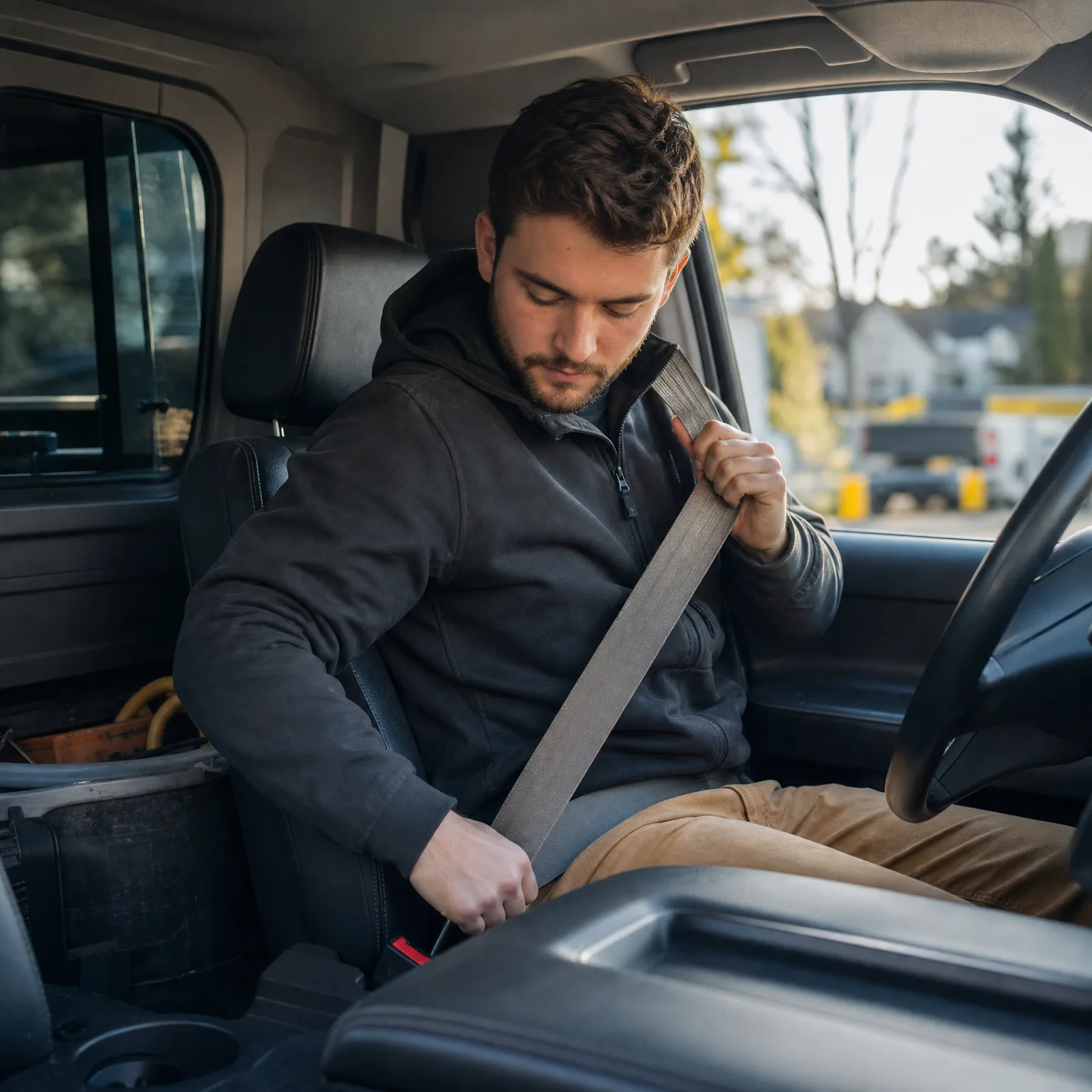
Non-owner SR-22 provides liability coverage when you drive someone else's vehicle with permission. It satisfies Hawaii's SR-22 filing requirement without a specific vehicle attached to the policy. It does not cover comprehensive or collision damage to any vehicle, and it does not cover any vehicle you own, lease, or have regular access to.
If you buy, inherit, or are gifted a vehicle during your SR-22 filing period, the non-owner policy no longer satisfies your filing requirement. Hawaii requires SR-22 filing to match your actual insurance situation. If you now own a vehicle, you must convert to a standard owner SR-22 policy covering that vehicle, or stack a separate owner policy on top of the non-owner policy and cancel the non-owner policy once the owner policy's SR-22 filing is confirmed by the state.
Most drivers switch to owner SR-22 immediately when they acquire a vehicle. The carrier files a cancellation notice for the non-owner policy and a new SR-22 form for the owner policy on the same day, preventing a gap. If you cancel the non-owner policy before the owner SR-22 is filed and confirmed, the state sees a lapse and issues a suspension notice even if the gap is only 48 hours. Coordinate the switch with your carrier before canceling the non-owner policy.
Frequently Asked Questions
How long do I have to fix a non-owner SR-22 lapse in Hawaii before my license is suspended?
Hawaii counties typically issue a notice of intent to suspend within 30 to 45 days of the lapse, with a cure deadline 15 to 30 days after the notice date. If you purchase a new non-owner SR-22 policy and file proof with your county licensing office before that deadline, the suspension does not take effect. After the deadline, you must pay Hawaii's $30 base reinstatement fee plus any county late fees.
Does a non-owner SR-22 lapse restart my filing period clock in Hawaii?
No. Hawaii counts the SR-22 filing period from the original conviction date, not the filing date. If you were required to maintain SR-22 for 3 years after a DUI conviction and your non-owner policy lapses in year 2, you still owe filing through the original 3-year endpoint once you cure the lapse and reinstate.
Can I reinstate a non-owner SR-22 filing online in Hawaii?
No. Hawaii has no centralized state DMV with a unified online reinstatement portal. You must contact or visit the county licensing office on your island of residence (Honolulu, Maui, Hawaii County, or Kauai County) to cure the lapse, pay the reinstatement fee, and provide proof of a new SR-22 filing.
What happens if my non-owner SR-22 lapses while I have a Hawaii restricted license for DUI?
The Administrative Driver's License Revocation Office (ADLRO) treats the lapse as a violation of restricted license conditions and revokes the conditional driving privilege. You must petition the court that issued the restricted license to reinstate, provide proof of a new SR-22 filing, and potentially complete any missed ignition interlock monitoring or alcohol education requirements.
Which carriers write non-owner SR-22 in Hawaii with PIP coverage included?
Progressive, Geico, National General, State Farm, and USAA for eligible military members all write non-owner SR-22 policies in Hawaii with PIP coverage built in. Mainland carriers unfamiliar with Hawaii's no-fault PIP mandate may issue policies that do not satisfy state filing requirements even if the SR-22 form itself is accepted.
Do I need to cancel my non-owner SR-22 if I buy a car during the filing period in Hawaii?
Yes, but only after your new owner SR-22 policy is filed and confirmed by the state. If you cancel the non-owner policy before the owner SR-22 filing reaches the state insurance division, Hawaii sees a lapse and issues a suspension notice. Coordinate the switch with your carrier to file the owner SR-22 and cancel the non-owner policy on the same day.
Related Articles
Hawaii Non-Owner to Owner SR-22 Conversion Guide
5/19/2026
Hawaii Non-Owner SR-22 Filing Speed: County Delays
5/19/2026

Hawaii Non-Owner SR-22 by Cause: DUI, Uninsured, Suspension
5/19/2026
Non-Owner SR-22 in Hawaii With a Suspension: What Works
5/19/2026

Hawaii Non-Owner SR-22 Cost by Cause & Island
5/19/2026

Non-Owner SR-22 in Hawaii: License Reinstatement Filing
5/19/2026