
Non-Owner SR-22 During Probationary License: Court Compliance
Get My Non-Owner SR-22 QuoteWhy Court-Ordered Probationary Licenses Trigger SR-22 Filing Requirements
Probationary licenses issued by court order as part of a DUI, reckless driving, or repeat-offense disposition nearly always include an SR-22 filing requirement as a condition of restricted driving privileges. The filing proves continuous liability coverage to both the DMV and the court supervising your case. Without active SR-22 on file, the probationary license becomes invalid and the court can revoke driving privileges immediately.
Non-owner SR-22 satisfies this requirement when you don't currently own a vehicle. The policy provides state-minimum liability coverage when you drive someone else's car with permission, and the carrier files Form SR-22 with your state's licensing agency on your behalf. Monthly premiums for non-owner SR-22 typically run $50-$90, compared to $140-$250 for owner SR-22 policies that include comprehensive and collision coverage on a titled vehicle.
The complication: most non-owner carriers require your driving record to show no unresolved violations at the time of application. If your probationary license was issued while charges are still pending, or while points from the underlying offense remain active on your record, many carriers decline coverage until those items clear. This creates a gap between when the court orders SR-22 and when you can actually secure a policy that meets the filing requirement.
How Non-Owner SR-22 Satisfies Court Orders Without a Vehicle
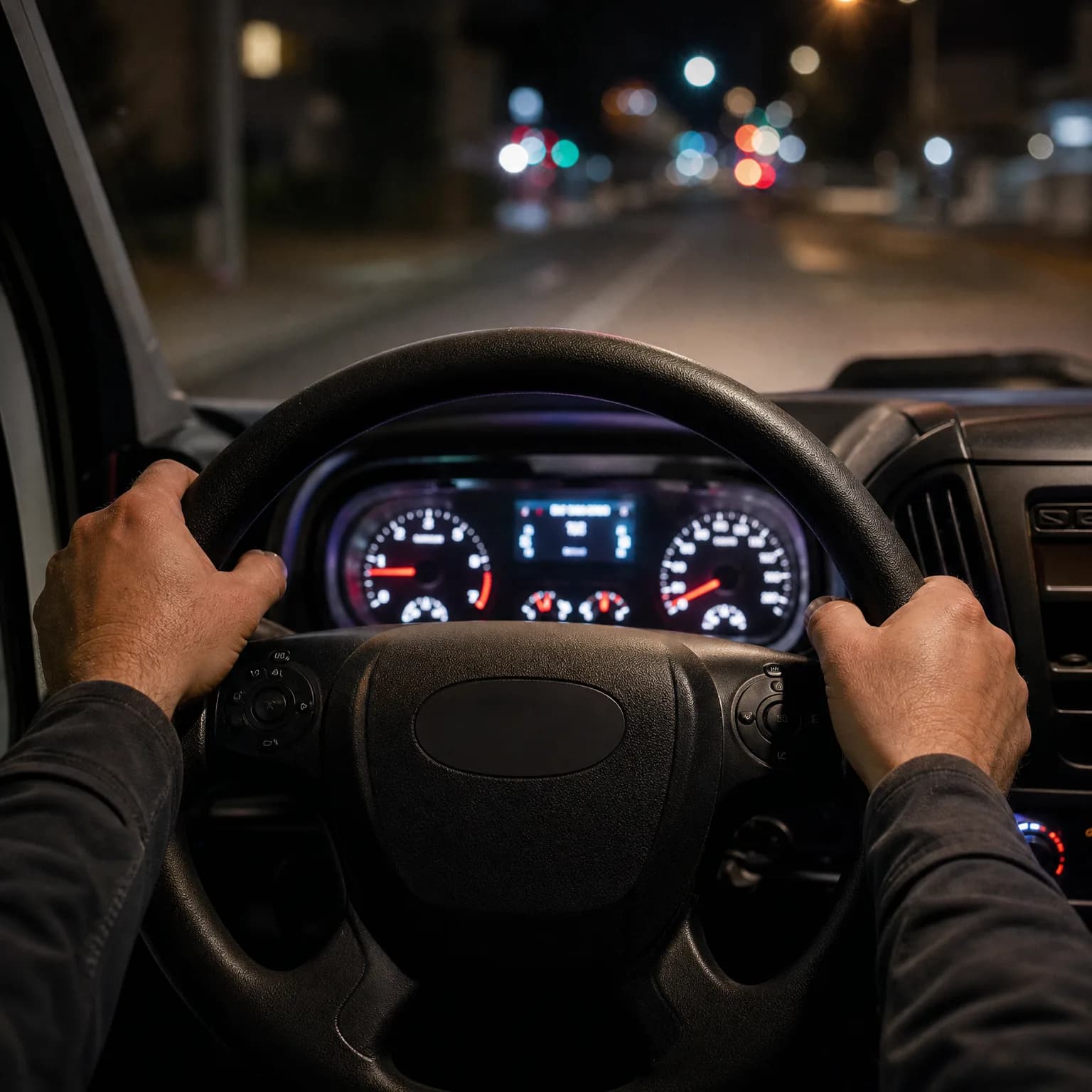
Court orders mandating SR-22 filing during probationary periods do not specify whether you must own a vehicle. The filing itself is the compliance mechanism. Non-owner SR-22 meets that requirement by providing continuous proof of financial responsibility without attaching coverage to a specific car.
When you purchase a non-owner policy, the carrier issues Form SR-22 to your state DMV within 24-48 hours. That filing shows the court and the licensing agency that you carry at least state-minimum liability limits. The policy itself covers you when driving borrowed or rented vehicles, satisfying the court's intent that you not operate a vehicle uninsured during the probationary period.
If you later acquire a vehicle while still under court supervision, you must convert to an owner SR-22 policy or stack coverage. Non-owner policies explicitly exclude vehicles you own, lease, or have regular access to. Driving a vehicle you purchased under a non-owner policy voids coverage and triggers an SR-22 lapse notification to the DMV, which the court will see as noncompliance with the original order.


When Non-Owner Carriers Accept Mid-Probation Enrollment
Non-owner SR-22 carriers evaluate your eligibility based on the status of your driving record at the time of application, not the underlying offense that triggered probation. If your case resulted in a conviction, points were assessed, and the court issued a probationary license as part of sentencing, most carriers treat that as a resolved violation. You can apply for non-owner SR-22 immediately after the probationary license is granted.
If your case is still pending, charges have not been adjudicated, or your probationary license was issued as a pretrial condition rather than post-conviction, carrier acceptance becomes inconsistent. Some non-standard carriers write policies during pretrial probation; others decline until the case resolves. Progressive, The General, and Bristol West typically accept mid-probation applicants if the court order explicitly requires SR-22 filing as a condition of the probationary license. State Farm and GEICO generally decline until all charges are dismissed or convicted and points are posted.
The second barrier: active suspension flags. If your full license is still suspended and the probationary license is the only credential you hold, some carriers require proof that the suspension will lift upon SR-22 filing. Others write the policy but delay SR-22 filing until the DMV confirms eligibility. Bring your court order, probationary license documentation, and a dated letter from the DMV showing what filing is required to lift the suspension when you apply. Carriers underwrite faster when they can confirm the filing will actually reinstate driving privileges.
Cover Your Filing Before You Own a Car Again
Get My Non-Owner SR-22 QuoteCost Differences Between Owner and Non-Owner SR-22 on Probation
Non-owner SR-22 premiums during probationary periods typically cost $600-$1,080 annually, or $50-$90 per month. Owner SR-22 premiums for drivers under court supervision range from $1,680-$3,000 annually, driven higher by comprehensive and collision coverage requirements and the increased underwriting risk of insuring a titled vehicle for a probationary driver.
The filing fee is identical for both policy types: $15-$50 depending on your state, paid once at policy inception and again if you allow the policy to lapse and must refile. Florida and Virginia probationary cases involving DUI require FR-44 filing instead of SR-22. Non-owner FR-44 premiums run $100-$160 per month due to doubled liability minimums, still cheaper than owner FR-44 policies that average $200-$350 monthly.
If your probationary period lasts two years and the court requires continuous SR-22 filing for the full term, non-owner coverage saves $2,160-$4,608 compared to maintaining an owner policy on a vehicle you may not need during restricted driving. Most probationary licenses limit you to work, school, medical appointments, and court-ordered programs. If those trips are walkable, bikeable, or covered by rideshare, non-owner SR-22 lets you satisfy the filing requirement without paying to insure a car you rarely use.

What Happens If You Miss a Premium Payment During Probation
Missing a premium payment on your non-owner SR-22 policy triggers an automatic lapse notification from the carrier to your state DMV, typically within 10 days of the missed due date. The DMV forwards that lapse to the court supervising your probationary case. Most court orders specify that SR-22 lapse constitutes a probation violation, which can result in immediate license revocation and a warrant for failure to comply with sentencing terms.
Re-filing SR-22 after a lapse does not retroactively cover the gap. The court will see the lapse date and the re-filing date on your driving record. Even if you reinstate coverage the same day, the lapse itself is the violation. Some judges allow a single lapse with proof of immediate reinstatement; others revoke probationary privileges on the first lapse and require you to reapply for restricted driving after serving additional suspension time.
To avoid lapse during probationary periods, set up automatic payments from a bank account you monitor closely. Non-owner SR-22 premiums are low enough that most carriers allow monthly EFT without installment fees. If your financial situation changes mid-probation and you cannot afford the premium, contact the carrier before the due date. Some non-standard carriers offer 10-day grace periods or will work out a delayed payment plan rather than filing an immediate lapse notice, but you must initiate that conversation before the account goes delinquent.

How to Apply for Non-Owner SR-22 With an Active Court Order
Start by requesting a certified copy of your court order from the clerk's office in the jurisdiction that issued your probationary license. The order should specify the SR-22 filing requirement, the duration of filing, and any coverage limits the court mandates. Most states require 25/50/25 liability minimums for SR-22, but some courts order higher limits as a sentencing condition. Bring that documentation when you contact carriers.
Call non-standard carriers directly rather than using aggregator quote tools. Non-owner SR-22 during probationary periods is a manual underwriting decision in most cases. Progressive, The General, Bristol West, Acceptance, and Dairyland write the majority of non-owner SR-22 policies for court-supervised drivers. Explain that you are under a court-ordered probationary license, you do not own a vehicle, and you need SR-22 filing to comply with sentencing terms. Ask whether they require the underlying case to be fully adjudicated before writing the policy.
Once approved, the carrier will ask for your driver's license number, the address where the policy should be issued, and payment for the first month plus the SR-22 filing fee. The policy becomes effective immediately upon payment, and the carrier electronically files Form SR-22 with your state DMV within 24-48 hours. Request a copy of the filed SR-22 and a declarations page showing your policy number, effective date, and liability limits. Bring both documents to your probation officer or submit them to the court as proof of compliance. Some courts require monthly proof of active coverage; ask your probation officer whether you need to provide updated declarations pages at each check-in.
Frequently Asked Questions
Can I use non-owner SR-22 to satisfy a court order if I don't own a car?
Yes. Court orders requiring SR-22 filing do not mandate vehicle ownership. Non-owner SR-22 provides the continuous proof of financial responsibility the court requires, and the carrier files Form SR-22 with your state DMV on your behalf. The policy covers you when driving borrowed or rented vehicles during your probationary period.
Will non-owner SR-22 carriers accept me if my probationary license case is still pending?
Carrier acceptance varies. Progressive, The General, and Bristol West typically write policies if the court order explicitly requires SR-22 as a pretrial condition. State Farm and GEICO usually decline until charges are resolved and points are posted. Bring your court order and probationary license documentation when you apply to speed underwriting decisions.
What happens if I buy a car while still on probationary SR-22 filing?
You must convert to an owner SR-22 policy or stack coverage immediately. Non-owner policies exclude vehicles you own, lease, or have regular access to. Driving a vehicle you purchased under a non-owner policy voids coverage and triggers an SR-22 lapse notification to the DMV, which the court supervising your probation will see as noncompliance.
How much does non-owner SR-22 cost during a court-ordered probationary period?
Premiums typically run $50-$90 per month, or $600-$1,080 annually, plus a one-time filing fee of $15-$50 depending on your state. Florida and Virginia DUI cases require FR-44 filing instead, which costs $100-$160 monthly due to doubled liability minimums. Non-owner SR-22 costs 30-60% less than owner policies that include comprehensive and collision coverage.
Does missing a premium payment violate my probationary license terms?
Yes, in most cases. Missing a payment triggers an SR-22 lapse notification to your state DMV, which forwards the lapse to the court. Most probationary orders specify that SR-22 lapse is a probation violation that can result in immediate license revocation and a warrant for noncompliance. Set up automatic payments to avoid this outcome.
Do I need to show proof of non-owner SR-22 to my probation officer?
Bring a copy of the filed SR-22 and your policy declarations page to your first probation check-in. Some courts require monthly proof of active coverage; ask your probation officer whether you need to provide updated declarations at each appointment. The carrier electronically files SR-22 with the DMV, but you are responsible for demonstrating compliance to the court.
Related Articles
Non-Owner SR-22 After Court-Ordered Filing Explained
5/19/2026

Non-Owner SR-22 for Court Orders: Does It Count?
5/19/2026
Non-Owner SR-22 Filing Without a Vehicle After Suspension
5/19/2026

Non-Owner SR-22 After Underage DUI: Filing Guide
5/19/2026

Non-Owner SR-22 When Suspension Requires Filing
5/19/2026
Non-Owner SR-22 vs Owner SR-22: Which Filing Fits
5/19/2026