
Non-Owner SR-22 and Vehicle Purchase: When to Convert
Get My Non-Owner SR-22 QuoteWhat Happens When You Buy a Car While Holding Non-Owner SR-22
Your non-owner SR-22 policy explicitly excludes any vehicle titled or registered in your name. The day you purchase or are gifted a vehicle—title transfer recorded—you no longer qualify for non-owner coverage. Most carriers include a continuous-disclosure clause requiring you to notify them within 10 to 30 days of acquiring a vehicle. If you drive the newly acquired vehicle under non-owner coverage, you are driving uninsured. If you fail to notify the carrier and they discover the title transfer through periodic DMV database cross-checks, they will cancel your policy for material misrepresentation retroactive to the acquisition date.
Retroactive cancellation triggers an SR-22 lapse notification to your state DMV. Even if you held valid non-owner coverage for six months before buying the car, the lapse resets your filing clock and typically adds a suspension extension—60 to 90 days in most states, longer in repeat-offense cases. You lose credit for the time already served under non-owner SR-22.
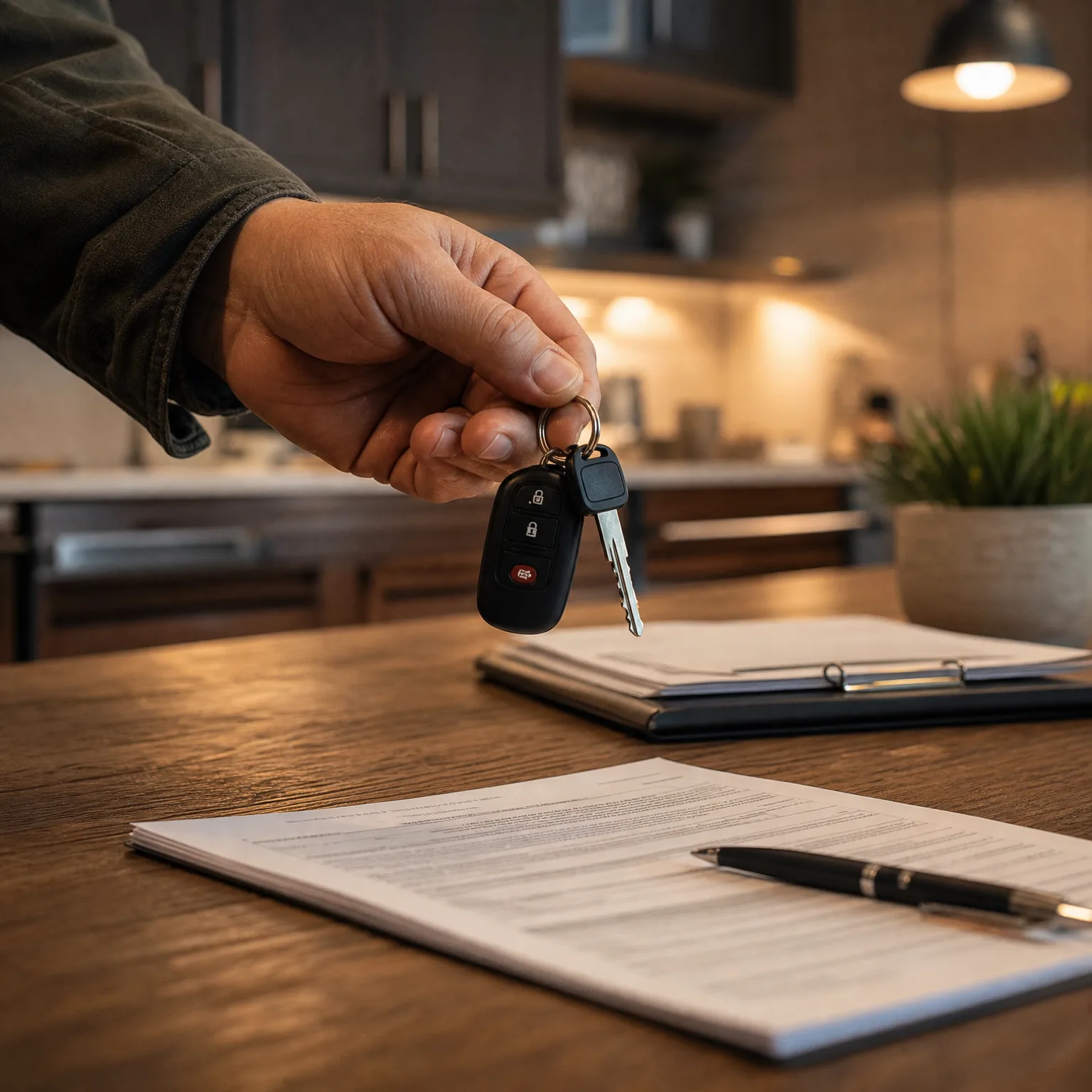
The conversion window is the period between vehicle acquisition and carrier-imposed cancellation. You must convert to an owner SR-22 policy on the newly acquired vehicle before the carrier files the lapse notice. This usually means binding new coverage within 10 to 30 days of title transfer, depending on your carrier's notification policy terms.
Why Carriers Cannot Extend Non-Owner Policies to Owned Vehicles
Non-owner SR-22 policies are underwritten as liability-only coverage for occasional use of borrowed vehicles. The underwriting model assumes no regular access to a specific vehicle, no collision exposure, and lower frequency of use. Premiums reflect this reduced risk. When you acquire a vehicle, the risk profile changes categorically. The carrier now faces comprehensive and collision exposure, regular use patterns, and vehicle-specific theft and damage risk.
Insurance regulations in every state prohibit carriers from covering owned vehicles under non-owner policies. The policy form itself—filed with the state Department of Insurance—defines coverage as applicable only to vehicles not owned by the named insured. Extending that coverage to an owned vehicle would violate the filed policy language and constitute unfiled coverage, which is prohibited. Carriers cannot amend the coverage mid-term to include your newly acquired vehicle without issuing a different policy type.
This is not a bureaucratic preference. It is a structural limitation of the non-owner product. The only path forward is conversion to a standard owner SR-22 policy or, if you keep both the non-owner policy and separately insure the owned vehicle under a different policy, you must terminate the non-owner policy to avoid double-coverage confusion and ensure the correct SR-22 filing remains active.


How to Convert Non-Owner SR-22 to Owner SR-22 Without Filing Gaps
Contact your current non-owner SR-22 carrier the same day you complete vehicle purchase. Provide the VIN, title date, and vehicle details. Most carriers that write non-owner SR-22 also write owner SR-22 and can convert your policy same-day if you call before 3 PM in your time zone. The carrier will cancel the non-owner policy effective the date of vehicle acquisition and bind a new owner policy effective the same date, maintaining continuous SR-22 filing status. Confirm the carrier will file the updated SR-22 form with your state DMV showing the new policy number and vehicle details.
If your current carrier does not write owner SR-22 in your state, you must shop and bind new coverage before canceling the non-owner policy. Bind the new owner SR-22 policy with an effective date matching your vehicle acquisition date or earlier. Once the new carrier confirms SR-22 filing with the state, cancel the non-owner policy retroactive to the same effective date. Do not cancel the non-owner policy before confirming the new SR-22 filing is recorded with your state DMV—call the DMV compliance unit directly or check your online license status portal to verify.
Expect premium increases of 40 to 80 percent when converting from non-owner to owner SR-22. You are now insuring a specific vehicle with higher liability limits in most cases, and the carrier is pricing comprehensive and collision exposure even if you decline those coverages. Set aside an additional $60 to $110 per month for the premium difference. Some carriers allow you to spread the conversion cost increase over the remaining filing period rather than requiring an immediate lump-sum payment.

Cover Your Filing Before You Own a Car Again
Get My Non-Owner SR-22 QuoteThe Lapse Risk Window and State DMV Notification Timing
State DMVs receive SR-22 lapse notifications from carriers within 24 to 72 hours of policy cancellation. The lapse is recorded on your license record immediately. Most states impose an automatic suspension extension the day the lapse is recorded, regardless of how much time you had already served under the non-owner policy. If you held non-owner SR-22 for eight months of a one-year filing requirement, then bought a car and failed to convert within 30 days, the carrier cancels your policy and reports the lapse. Your state DMV treats this as a new suspension event. You lose the eight months of credit and start over with a new one-year filing period plus the suspension extension penalty.
Suspension extension penalties for SR-22 lapse during an active filing period typically add 60 days in first-lapse cases and 90 to 180 days in repeat-lapse cases. Some states treat a lapse as equivalent to driving uninsured and impose the full uninsured-driving suspension—six months in many states. You cannot appeal the suspension extension by explaining that you bought a car and did not realize the non-owner policy no longer covered you. The filing requirement places affirmative responsibility on you to maintain continuous qualifying coverage.
To avoid this outcome, bind the replacement owner SR-22 policy before the non-owner policy cancellation takes effect. Overlapping coverage for one or two days is vastly cheaper than a 60- to 180-day suspension extension and filing-clock reset.

Stacking Non-Owner SR-22 and Owner Coverage on a Different Vehicle
Some drivers attempt to keep the non-owner SR-22 policy active while separately insuring the newly acquired vehicle under a standard owner policy without SR-22 endorsement attached. This creates two problems. First, your state DMV requires SR-22 filing on all policies covering vehicles you own. If you own a vehicle and insure it under a policy without SR-22 endorsement, the DMV treats that as non-compliance with the filing requirement even if you maintain a separate non-owner SR-22 on file. The non-owner SR-22 does not satisfy the requirement once you own a vehicle.
Second, most non-owner policies include an owned-vehicle exclusion that automatically voids coverage if you acquire a vehicle during the policy term. Even if you do not drive the owned vehicle, merely holding title triggers the exclusion. The carrier will discover the title through periodic database checks and cancel the non-owner policy retroactively, filing a lapse notice with the state. You now have a lapsed SR-22 filing and face suspension extension even though you maintained separate owner coverage on the vehicle.
The only compliant path is to attach the SR-22 endorsement to the owner policy covering the newly acquired vehicle and cancel the non-owner policy. If you plan to drive other people's vehicles occasionally, the owner SR-22 policy includes non-owned vehicle liability coverage as a standard component—you do not lose the ability to drive borrowed cars by converting to owner coverage.
When Temporary Vehicle Access Does Not Require Conversion
Borrowing a family member's vehicle for two weeks while yours is in the shop does not trigger conversion requirements. Non-owner SR-22 is designed for this scenario. The distinction is ownership and regular access. If you hold title to the vehicle, you must convert immediately. If you are added as a listed driver on someone else's policy for their vehicle, you do not own the vehicle and can maintain your non-owner SR-22 without issue.
Some states require SR-22 filing on all household vehicles if you live with the vehicle owner. If you move in with a parent or partner who owns a vehicle and your name is added to their household policy as a listed driver, check whether your state DMV treats that as requiring SR-22 endorsement on the household policy. In most states, your non-owner SR-22 satisfies the filing requirement separately and the household policy does not need SR-22 endorsement. In a few states—Florida and California in particular—the DMV requires SR-22 on all policies listing you as a driver, whether you own the vehicle or not. Verify this with your state DMV compliance unit before assuming your non-owner SR-22 remains sufficient.
Rental vehicles and car-sharing services like Zipcar are treated as non-owned vehicles. Your non-owner SR-22 policy provides liability coverage when you rent or use these vehicles, and you do not need to convert to owner coverage.
Frequently Asked Questions
Can I add my newly purchased car to my non-owner SR-22 policy instead of converting?
No. Non-owner SR-22 policies exclude all vehicles titled in your name by definition. Your carrier cannot add an owned vehicle to a non-owner policy—the policy form filed with your state prohibits it. You must convert to an owner SR-22 policy covering the newly acquired vehicle within the carrier's notification window, typically 10 to 30 days.
What happens if I do not tell my carrier I bought a car?
Your carrier will discover the title transfer through periodic DMV database checks and cancel your non-owner SR-22 policy retroactive to the date you acquired the vehicle. The carrier files a lapse notice with your state DMV, triggering an automatic suspension extension and resetting your filing clock. You lose credit for all time served under the non-owner policy.
How much more does owner SR-22 cost compared to non-owner SR-22?
Expect premium increases of 40 to 80 percent when converting from non-owner to owner SR-22. Non-owner policies cost less because they carry no vehicle-specific risk. Owner policies price comprehensive and collision exposure even if you decline those coverages, and most states require higher liability limits once you own a vehicle. Budget an additional $60 to $110 per month on average.
Do I lose my filing time credit if I convert from non-owner to owner SR-22?
No, as long as you convert without a coverage gap. If you bind the owner SR-22 policy before canceling the non-owner policy, your state DMV sees continuous SR-22 filing and your time credit carries forward. If you allow a lapse—even one day—most states reset your filing clock and add a suspension extension penalty.
Can I keep non-owner SR-22 and separately insure my car without SR-22?
No. Your state DMV requires SR-22 endorsement on all policies covering vehicles you own. If you own a vehicle and insure it under a standard policy without SR-22, the DMV treats that as non-compliance with the filing requirement even if you maintain a separate non-owner SR-22. The non-owner SR-22 does not satisfy the requirement once you acquire a vehicle.
Does borrowing a family member's car count as vehicle acquisition?
No. Non-owner SR-22 covers occasional use of borrowed vehicles. As long as the vehicle is not titled in your name and you are not listed as a co-owner, you can drive it under your non-owner policy without conversion. If you are added as a listed driver on the owner's policy, verify with your state DMV whether SR-22 endorsement is required on that policy in addition to your non-owner SR-22.
Related Articles

Non-Owner to Owner SR-22 Conversion After Buying a Car
5/19/2026

Non-Owner to Owner SR-22 Conversion Timing Guide
5/19/2026
Non-Owner SR-22 Does Not Cover Vehicles You Own
5/19/2026

Colorado Non-Owner SR-22 to Owner: Avoid Filing Gaps
5/19/2026
Non-Owner SR-22 When You Inherit a Vehicle Mid-Filing
5/19/2026

CA Non-Owner to Owner SR-22 When You Buy a Car
5/19/2026