
Minnesota Non-Owner SR-22 by Cause: DUI, Uninsured, Suspension
Get My Non-Owner SR-22 QuoteWhy Minnesota's Court-Based Limited License Changes Your SR-22 Filing Strategy
Minnesota assigns Limited License petitions to district court judges, not the Department of Public Safety's Driver and Vehicle Services. This means your SR-22 filing obligation is determined by the court order granting your Limited License, not by a standard administrative checklist. A DWI-triggered suspension requires SR-22 filing plus ignition interlock installation before the court will consider your petition. An uninsured-driving suspension requires SR-22 but typically no ignition interlock unless other violations stack. A points-accumulation suspension may not require SR-22 at all unless the court specifically orders it.
The practical consequence: you cannot file SR-22 before knowing which Limited License pathway applies to your case. DWI offenders face a mandatory 15-day hard suspension before petition eligibility opens. Uninsured drivers can petition immediately after suspension notice but must prove SR-22 coverage at filing. Points-driven suspensions depend entirely on the judge's discretion and the specific violations that accumulated the points.
Most non-owner SR-22 carriers writing in Minnesota charge $30-$50 per month for liability-only non-owner policies. The SR-22 filing fee itself is typically $25-$50 one-time, paid to the carrier, who then files electronically with DVS. Total monthly cost depends on your violation history: clean-record uninsured suspensions land at the low end, DWI cases with multiple priors can push monthly premiums above $90.

How DWI Suspensions Require Both SR-22 and Ignition Interlock for Limited License Eligibility
Minnesota Statute 171.30 governs Limited License eligibility. For DWI-related revocations, the statute mandates ignition interlock participation as a condition of Limited License issuance. This means your petition must include proof of an approved ignition interlock device installation and proof of SR-22 insurance before the court will schedule a hearing.
The 15-day hard suspension period starts from your revocation date, not your conviction date. You cannot drive at all during this window, even with a Limited License petition filed. Once the 15 days pass, you may file your petition with the district court in the county where the offense occurred. The court will review your petition, employment documentation, proof of ignition interlock installation, and SR-22 certificate. If approved, the Limited License restricts you to specific routes and times defined in the court order: typically work, medical appointments, chemical dependency treatment, and court-ordered programs.
The ignition interlock requirement adds $70-$100 per month in device lease and monitoring costs on top of your SR-22 premium. Carriers like Geico, Progressive, and Dairyland write non-owner SR-22 policies for Minnesota DWI suspensions, but you must disclose the ignition interlock requirement at quote time. Some carriers exclude ignition interlock users; others price them into the high-risk tier. Expect combined monthly costs of $120-$180 for non-owner SR-22 plus ignition interlock during your Limited License period.

Why Uninsured-Driving Suspensions Follow a Simpler SR-22 Pathway Without Interlock
Uninsured-driving suspensions under Minnesota Statute 65B.48 trigger administrative action by DVS, not criminal court proceedings. The state cancels your vehicle registration when your insurer reports a lapse through the electronic insurance verification system. If you are caught driving with a cancelled registration, DVS suspends your license.
SR-22 filing is required to reinstate your license after an uninsured-driving suspension. Minnesota's no-fault insurance law requires both liability coverage and Personal Injury Protection. Your SR-22 certificate must confirm you carry at least $30,000 per person, $60,000 per accident bodily injury liability, $10,000 property damage, and $40,000 PIP coverage. Non-owner SR-22 policies satisfy this requirement because they provide liability and PIP when you drive someone else's vehicle with permission.
The reinstatement fee for uninsured-driving suspensions is $30, substantially lower than the $680-$1,230 fees for DWI cases. No ignition interlock is required unless your suspension stacks a DWI charge. No court petition is required: you file SR-22 proof directly with DVS, pay the $30 reinstatement fee, and your license is restored once DVS processes the paperwork. Processing typically takes 3-5 business days after DVS receives your SR-22 certificate electronically from your carrier.
Carriers writing non-owner SR-22 for uninsured-driving suspensions in Minnesota include Progressive, Geico, Dairyland, Bristol West, The General, and National General. Monthly premiums for this trigger typically run $35-$65 because the violation profile is lower-risk than DWI.

Cover Your Filing Before You Own a Car Again
Get My Non-Owner SR-22 QuoteHow Points-Accumulation Suspensions Depend on Court Discretion for SR-22 Requirement
Minnesota's points system suspends licenses when drivers accumulate too many points from moving violations within a specific timeframe. Unlike DWI and uninsured-driving suspensions, points-driven suspensions do not automatically trigger SR-22 filing requirements. Whether you need SR-22 depends on the specific violations that accumulated the points and whether the court or DVS orders high-risk filing as a condition of reinstatement.
If your suspension stems from speeding tickets, lane violations, or other non-alcohol-related infractions, SR-22 is typically not required unless a judge specifically orders it during a contested case hearing. If your points include reckless driving, leaving the scene of an accident, or other serious violations, DVS may require SR-22 as part of the reinstatement process even without a court order.
The Limited License pathway for points suspensions mirrors the uninsured pathway: you petition the district court with proof of employment or hardship, and the judge decides whether to grant restricted driving privileges. If SR-22 is not required, your non-owner policy can be a standard liability-only policy without the SR-22 certificate attachment. This saves $25-$50 on the one-time filing fee and may reduce your monthly premium by $10-$20 because carriers price SR-22-required policies in a higher-risk tier.
If you are unsure whether your suspension requires SR-22, call DVS at 651-296-6911 before purchasing coverage. The DVS agent can tell you whether your suspension record shows an SR-22 filing requirement. Do not guess: filing unnecessary SR-22 wastes money, but failing to file required SR-22 extends your suspension indefinitely.
What Non-Owner SR-22 Covers When You Drive a Borrowed Vehicle in Minnesota
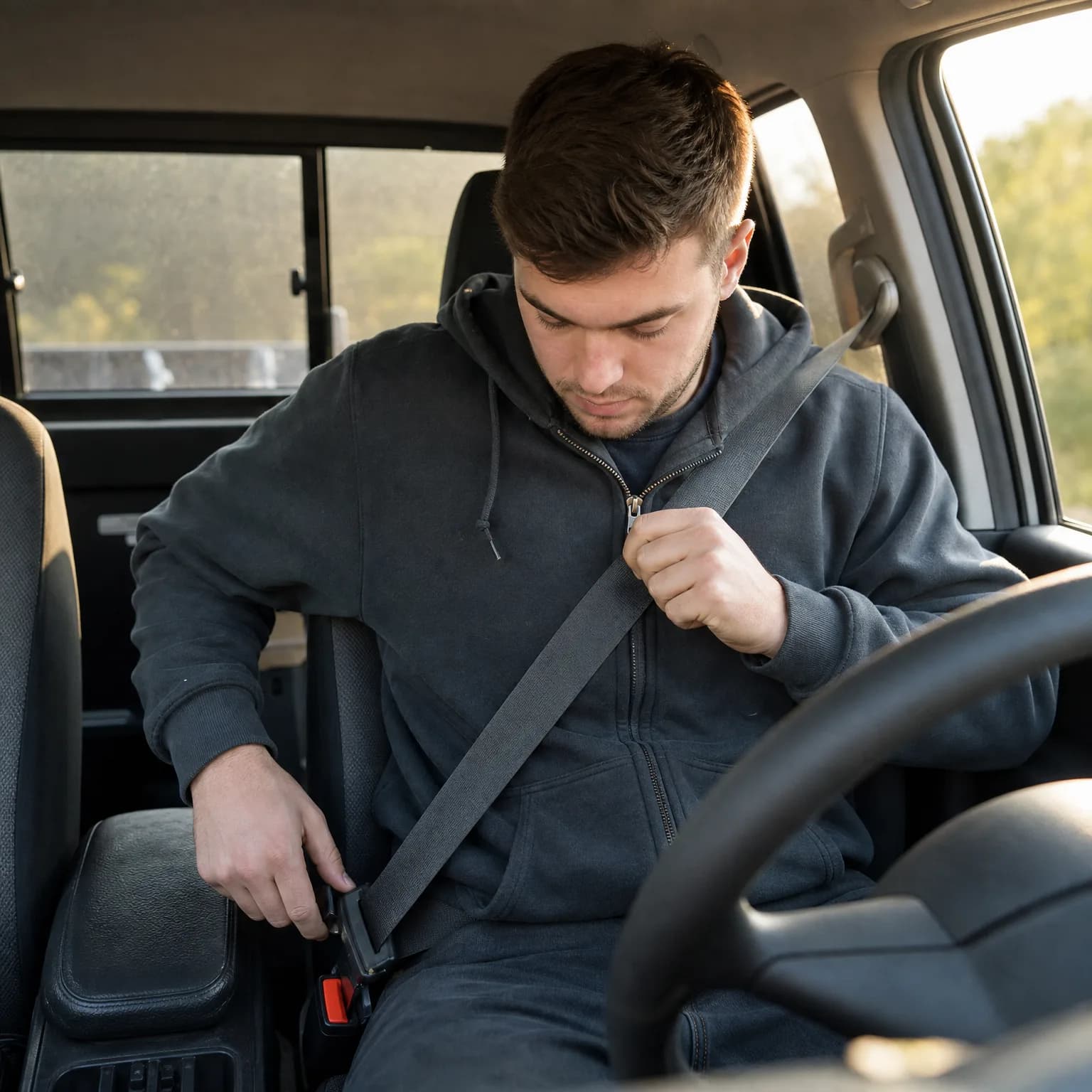
Non-owner SR-22 policies provide liability coverage when you drive a vehicle you do not own. The policy covers bodily injury and property damage you cause to others, plus Minnesota's required Personal Injury Protection for your own medical expenses. It does not cover physical damage to the vehicle you are driving: that falls under the vehicle owner's collision and comprehensive coverage.
Most non-owner SR-22 policies in Minnesota provide the state minimum liability limits plus PIP. You can purchase higher liability limits if you want additional protection, but the SR-22 certificate itself only confirms you meet the state-mandated minimums. Carriers typically offer $50,000/$100,000/$25,000 liability limits as the next step up, adding $10-$15 per month to your premium.
The policy does not cover any vehicle you later acquire during the filing period. If you buy or are gifted a car while your SR-22 filing is active, you must convert to a standard owner policy and notify your carrier immediately. The carrier will file an updated SR-22 certificate with DVS showing the new policy details. Failing to update your policy after acquiring a vehicle leaves you uninsured when driving that vehicle, which can trigger a new suspension for uninsured driving.

How to File Non-Owner SR-22 in Minnesota and What It Costs by Cause
Contact a carrier licensed to write non-owner SR-22 in Minnesota. Progressive, Geico, Dairyland, Bristol West, The General, and National General all write non-owner SR-22 policies statewide. Request a non-owner SR-22 quote and disclose your suspension cause: DWI, uninsured driving, points accumulation, or other. The carrier will pull your driving record and assign you to a risk tier.
The carrier collects your first month's premium plus the SR-22 filing fee upfront. The filing fee is typically $25-$50 one-time. The carrier files Form SR-22 electronically with Minnesota DVS on your behalf, usually within 24-48 hours. DVS processes the SR-22 certificate and updates your license record to show proof of financial responsibility on file.
Monthly premiums by cause: DWI suspensions with ignition interlock run $50-$90 for the non-owner SR-22 policy alone, plus $70-$100 for the ignition interlock device. Uninsured-driving suspensions run $35-$65 per month. Points-accumulation suspensions requiring SR-22 run $40-$70 per month. If your suspension does not require SR-22, expect $30-$50 per month for a standard non-owner liability policy without the SR-22 certificate.
You must maintain continuous SR-22 coverage for the full filing period Minnesota requires: typically three years for DWI, three years for uninsured driving, and variable for points suspensions depending on court orders. If your policy lapses for any reason, your carrier files Form SR-26 with DVS notifying the state your coverage ended. DVS suspends your license again immediately. Reinstatement after a lapse requires refiling SR-22 and paying the $30 reinstatement fee again.
Frequently Asked Questions
Can I get a Limited License in Minnesota without SR-22 if my suspension is for unpaid tickets?
Minnesota district courts do not require SR-22 for unpaid-ticket suspensions unless the tickets involved uninsured driving or reckless behavior. You must still petition the court for a Limited License and prove hardship, but SR-22 is typically not part of the reinstatement condition. Call DVS at 651-296-6911 to confirm whether your specific suspension record shows an SR-22 filing requirement before purchasing coverage.
Does Minnesota accept non-owner SR-22 for DWI suspensions or do I need an owned vehicle on the policy?
Minnesota accepts non-owner SR-22 for DWI suspensions as long as the policy includes ignition interlock coverage and meets state liability and PIP minimums. You do not need to own a vehicle to satisfy the SR-22 requirement. The Limited License court order will specify whether you need SR-22; if yes, non-owner policies from carriers like Geico, Progressive, and Dairyland satisfy the requirement.
How long does Minnesota require SR-22 filing after an uninsured-driving suspension?
Minnesota typically requires three years of SR-22 filing after an uninsured-driving suspension, measured from the date your license is reinstated. If your policy lapses at any point during the three years, DVS suspends your license again and the three-year clock does not restart: you must complete the full original period plus any additional suspension time from the lapse.
What happens if I buy a car while holding a non-owner SR-22 policy in Minnesota?
You must notify your carrier immediately and convert to a standard owner SR-22 policy. The non-owner policy does not cover vehicles you own, so driving your newly acquired car under the non-owner policy leaves you uninsured. Your carrier will file an updated SR-22 certificate with DVS showing the new policy details and vehicle information. Failing to update your policy can trigger a new suspension for uninsured driving.
Does the $30 Minnesota reinstatement fee apply to DWI suspensions or only uninsured-driving cases?
Can I file SR-22 in Minnesota before my Limited License petition is approved?
Yes. You can purchase non-owner SR-22 coverage and have your carrier file the certificate with DVS before your court hearing. In fact, for DWI cases, you must provide proof of SR-22 and ignition interlock installation as part of your petition documentation. Filing SR-22 early does not hurt: the three-year filing period starts from your reinstatement date, not the SR-22 filing date.
Do all Minnesota counties handle Limited License petitions the same way for non-owner SR-22 cases?
No. Minnesota's court-discretion model means outcomes vary by county and judge. Some judges routinely approve Limited License petitions for employment hardship; others require more extensive documentation or deny petitions for certain violation types. The SR-22 requirement itself is consistent statewide for DWI and uninsured-driving cases, but the court's willingness to grant Limited License privileges varies significantly by jurisdiction.
Related Articles

Minnesota Non-Owner SR-22: Cost, Carriers, Filing Path
5/19/2026
Non-Owner SR-22 Minnesota License Suspension Filing
5/19/2026

MN Non-Owner SR-22 Cost by Cause: DWI vs Lapse
5/19/2026

Non-Owner SR-22 Premium Range in Minnesota
5/19/2026

MN Non-Owner SR-22 Filing Duration by Cause Type
5/19/2026
MN Non-Owner SR-22 vs Owner: When Non-Owner Saves
5/19/2026