
Indiana Non-Owner SR-22 to Owner Conversion When You Buy a Car
Get My Non-Owner SR-22 QuoteWhy Non-Owner SR-22 Stops Working When You Acquire a Vehicle
Non-owner SR-22 policies provide liability coverage only when you drive a vehicle you do not own. The moment you purchase, lease, finance, or receive title to a vehicle, that exclusion activates. Your non-owner policy no longer covers you as the driver of that specific vehicle, and your SR-22 filing—while still technically active with the Indiana BMV—no longer reflects accurate insurance for your current situation.
Indiana uses the INSPECT electronic reporting system, which tracks insurance status in near real-time. When your non-owner carrier learns you now own a vehicle, two things happen: they either cancel your policy for material misrepresentation (you no longer meet the underwriting criteria for a non-owner product), or they refuse to add the vehicle to your existing non-owner policy (because non-owner policies cannot schedule specific vehicles). Either scenario triggers a lapse notification to the BMV within 24 to 48 hours.
The BMV does not distinguish between "I'm switching policies" and "I let my coverage lapse." If your non-owner SR-22 cancels before your new owner policy's SR-22 files, Indiana treats that gap as a compliance failure. Your driving privileges suspend automatically, and you face a reinstatement fee of $250 under IC 9-29-8, in addition to restarting any probationary license or specialized driving privilege period you had remaining.
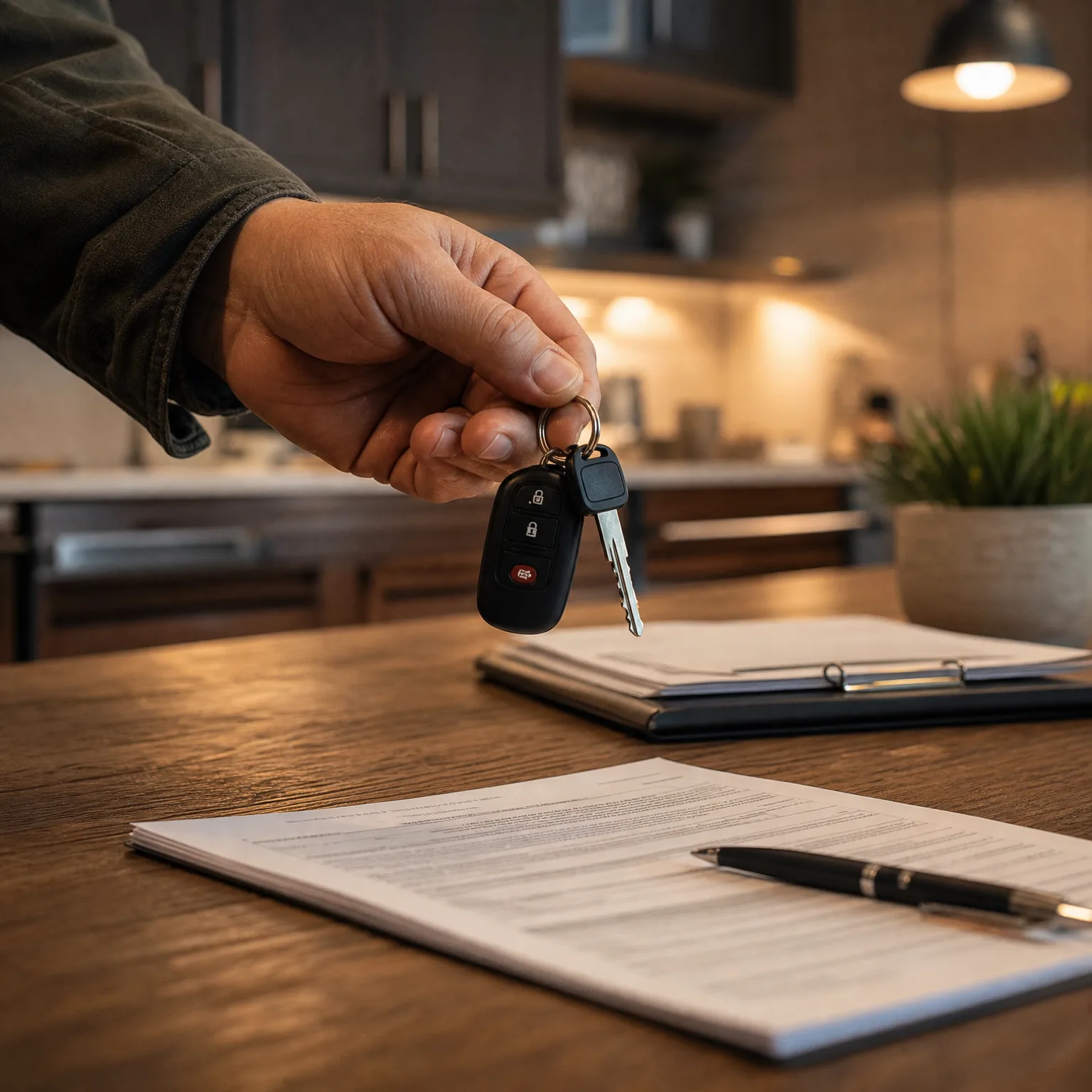
What You Must Do the Day You Acquire the Vehicle
Before you drive the newly acquired vehicle off the lot, off the seller's driveway, or out of the impound facility, you must bind an owner SR-22 policy that lists that specific vehicle. Contact a carrier that writes SR-22 in Indiana—Geico, Progressive, Dairyland, The General, Bristol West, GAINSCO, and National General all write owner SR-22 policies statewide. Provide the VIN, year, make, model, and confirmation that you need continuous SR-22 filing to satisfy an active BMV requirement.
The new policy's effective date must be the same day you take ownership, or earlier. If you buy the vehicle on a Tuesday and your new policy doesn't start until Thursday, you create a two-day gap. That gap is enough to trigger a BMV suspension under Indiana's continuous coverage requirement in IC 9-25-4. Carriers can usually bind same-day coverage if you call before business hours close; some offer instant online binding for standard-risk vehicles.
Once your new policy is bound, the carrier files Form SR-22 with the Indiana BMV electronically, typically within 24 hours. You should then contact your non-owner carrier and request cancellation effective the same date your new owner policy started. Do not cancel the non-owner policy before the owner policy is active and filed—sequence matters. If you cancel first and the new carrier delays filing, you create the very gap you're trying to avoid.


Premium Changes When Converting from Non-Owner to Owner SR-22
Non-owner SR-22 premiums in Indiana typically run $30 to $70 per month for drivers with DUI or uninsured-related suspensions, depending on age, violation severity, and county. Owner SR-22 premiums for the same driver insuring a specific vehicle typically run $140 to $280 per month, sometimes higher for high-value vehicles or drivers with multiple violations. The increase is not a penalty—it reflects the addition of vehicle-specific liability exposure, and optionally collision and comprehensive coverage if you financed the vehicle.
Your new premium depends on the vehicle's year, make, model, stated value, and your chosen liability limits. Indiana requires minimum liability of 25/50/25 ($25,000 bodily injury per person, $50,000 per accident, $25,000 property damage), but many SR-22 carriers recommend higher limits—50/100/50 or 100/300/100—to reduce per-incident out-of-pocket risk. If you financed or leased the vehicle, the lender will require full coverage (comprehensive and collision), which adds $60 to $150 per month depending on your deductible and the vehicle's value.
The SR-22 filing fee itself does not change. Indiana carriers charge $15 to $25 per filing, whether the underlying policy is non-owner or owner. You pay that fee once at policy inception, and again if you ever cancel and refile. Your total cost over the remaining SR-22 period depends on how many months you have left. If you had 18 months remaining on a 3-year filing requirement when you acquired the vehicle, expect to pay owner SR-22 rates for those 18 months—not the lower non-owner rate you'd been paying.

Cover Your Filing Before You Own a Car Again
Get My Non-Owner SR-22 QuoteWhat Happens If You Drive the New Vehicle on Your Non-Owner Policy
If you drive a vehicle you own while insured under a non-owner policy, you are driving uninsured under Indiana law. Non-owner policies explicitly exclude coverage for vehicles owned by the named insured or any household member. If you cause an accident, your carrier will deny the claim. The other driver's damages come out of your personal assets, and Indiana's BMV will suspend your license for failure to satisfy a judgment under IC 9-25-8 if you cannot pay.
Even if you do not cause an accident, the exposure exists the moment you take ownership. If a police officer stops you for any reason and runs your insurance status through INSPECT, the system may flag a mismatch: the vehicle's registered owner (you) does not match the insured driver on the non-owner policy. Some officers will issue a citation for driving without proof of insurance. Others will impound the vehicle on the spot. Either outcome restarts your suspension clock and adds new reinstatement requirements.
Some drivers assume they can wait until their non-owner policy renews in 30 or 60 days, then add the vehicle. That assumption is wrong. Non-owner policies do not convert to owner policies at renewal—they cancel for material change in risk, or the carrier non-renews you. You must bind a separate owner policy the day you acquire the vehicle, regardless of where you are in your non-owner policy term.

How to Handle Mid-Term Conversion Without Paying Double Premiums
Most non-owner SR-22 policies in Indiana are written on monthly payment plans. If you acquire a vehicle mid-month, you have already paid for that month's non-owner coverage. When you bind the new owner policy effective the same day you take ownership, you may feel like you're paying twice—but you are not.
Request a pro-rata refund from your non-owner carrier. Indiana insurance law requires carriers to refund unearned premium when a policy cancels mid-term for reasons other than non-payment. If you cancel on the 15th of the month and had paid through the 30th, you are owed a refund for the unused 15 days. Most carriers process refunds within 10 to 14 business days, either as a check or a credit to the payment method on file.
Some carriers allow you to apply that refund as a credit toward your first month's premium on the new owner policy if you stay with the same company. Geico, Progressive, and Dairyland all write both non-owner and owner SR-22, and their customer service teams can coordinate internal transfers. If you switch carriers, the refund process takes slightly longer, but you are still entitled to it. Do not let concern about double-paying stop you from binding the owner policy immediately—the refund will arrive, and the cost of a suspension far exceeds one month's overlapping premium.

What to Do If You Realize the Conversion Too Late
If you acquired a vehicle days or weeks ago and only now realize your non-owner SR-22 does not cover it, bind an owner SR-22 policy immediately and contact the Indiana BMV to check your driving privilege status. If INSPECT already flagged the lapse and suspended your license, you face a $250 reinstatement fee and possible restart of any probationary license or specialized driving privilege period.
You cannot backdate an insurance policy to cover a gap that already occurred. If you drove the vehicle during the lapse period, you drove uninsured. If you were cited or involved in an accident during that window, you have separate legal exposure beyond the SR-22 requirement. Consult an Indiana traffic attorney if citations or claims are already in play—the BMV suspension is only one consequence.
To reinstate after a lapse-related suspension, you must: (1) bind a new owner SR-22 policy, (2) have the carrier file Form SR-22 with the BMV, (3) pay the $250 reinstatement fee online via mybmv.com or in person at a BMV branch, and (4) wait for BMV processing, which typically takes 3 to 5 business days. If you were on a probationary license or specialized driving privilege, the BMV may require you to reapply or serve additional waiting periods depending on how long the lapse lasted and whether any violations occurred during the lapse window.
Frequently Asked Questions
Can I add a vehicle to my existing non-owner SR-22 policy in Indiana?
No. Non-owner SR-22 policies exclude coverage for vehicles owned by the named insured. If you acquire a vehicle, you must bind a separate owner SR-22 policy that schedules that specific vehicle. Your non-owner carrier will cancel your policy or refuse to add the vehicle.
How long does it take for the new owner SR-22 to file with the Indiana BMV?
Most carriers file Form SR-22 electronically within 24 hours of binding the policy. Indiana's INSPECT system receives the filing in near real-time. You should see the update reflected on your mybmv.com account within 48 hours of binding, though processing delays occasionally extend that to 3 business days.
What happens to my SR-22 filing period when I convert from non-owner to owner?
Your SR-22 filing period does not reset when you convert from non-owner to owner. If you had 18 months remaining on a 3-year requirement, you still have 18 months remaining after conversion. The BMV tracks continuous filing, not the type of policy underneath it.
Do I need to notify the Indiana BMV separately when I switch from non-owner to owner SR-22?
No. Your new carrier files Form SR-22 electronically with the BMV when you bind the owner policy. The BMV's INSPECT system receives that filing automatically. You do not need to visit a BMV branch or submit additional paperwork unless your license was already suspended for a lapse.
Can I switch back to non-owner SR-22 if I sell the vehicle later?
Yes. If you sell, total, or otherwise dispose of the vehicle before your SR-22 filing period ends, you can bind a new non-owner SR-22 policy effective the date you no longer own the vehicle. Cancel your owner policy the same day, and have the non-owner carrier file SR-22 immediately to avoid a gap.
What if I receive a vehicle as a gift or inheritance mid-filing period?
The same conversion rules apply regardless of how you acquired the vehicle. The moment title transfers to your name, your non-owner SR-22 stops covering you. Bind an owner SR-22 policy effective the date of title transfer, and cancel your non-owner policy after the new SR-22 files with the BMV.
Related Articles

Indiana Non-Owner SR-22: Cost, Carriers, Filing Rules
5/19/2026

Indiana Non-Owner SR-22: Carriers and Filing Speed
5/19/2026

Indiana Non-Owner SR-22 vs Owner: When It Saves Money
5/19/2026

Indiana Non-Owner SR-22 by Cause: DUI, Uninsured Triggers
5/19/2026

Illinois Non-Owner to Owner SR-22 When You Buy a Car
5/19/2026

Indiana Non-Owner SR-22 Cost by Cause: What You'll Pay
5/19/2026