
Florida Non-Owner FR-44 vs Non-Owner SR-22: Which Filing Your Cause Triggers
Get My Non-Owner SR-22 QuoteWhy Florida Uses Two Different Filing Systems Based on Your Violation
Florida is one of only two states that require FR-44 certificates instead of SR-22 for DUI-related offenses. If your suspension stems from a DUI conviction, implied consent refusal, or subsequent alcohol-related violation, you need FR-44 filing with $100,000/$300,000 bodily injury and $50,000 property damage liability—significantly higher than the $10,000 property damage and PIP minimums most Florida drivers carry.
If your suspension stems from insurance lapse, driving without insurance, or accumulation of points unrelated to alcohol, you need standard SR-22 filing with Florida's minimum $10,000 property damage and $10,000 PIP coverage. The filing mechanism is identical—your carrier submits the certificate to DHSMV electronically via the Florida Insurance Tracking System—but the coverage floor and resulting premium diverge sharply.
The practical consequence: non-owner FR-44 policies cost roughly $80–$150/month depending on age, county, and violation severity, while non-owner SR-22 policies for non-DUI causes typically run $40–$70/month. Both satisfy DHSMV's filing requirement. Both provide liability coverage when you drive someone else's vehicle with permission. Neither covers a vehicle you own or regularly use. The cause determines which filing your reinstatement requires.
What Non-Owner FR-44 Actually Covers and What It Does Not
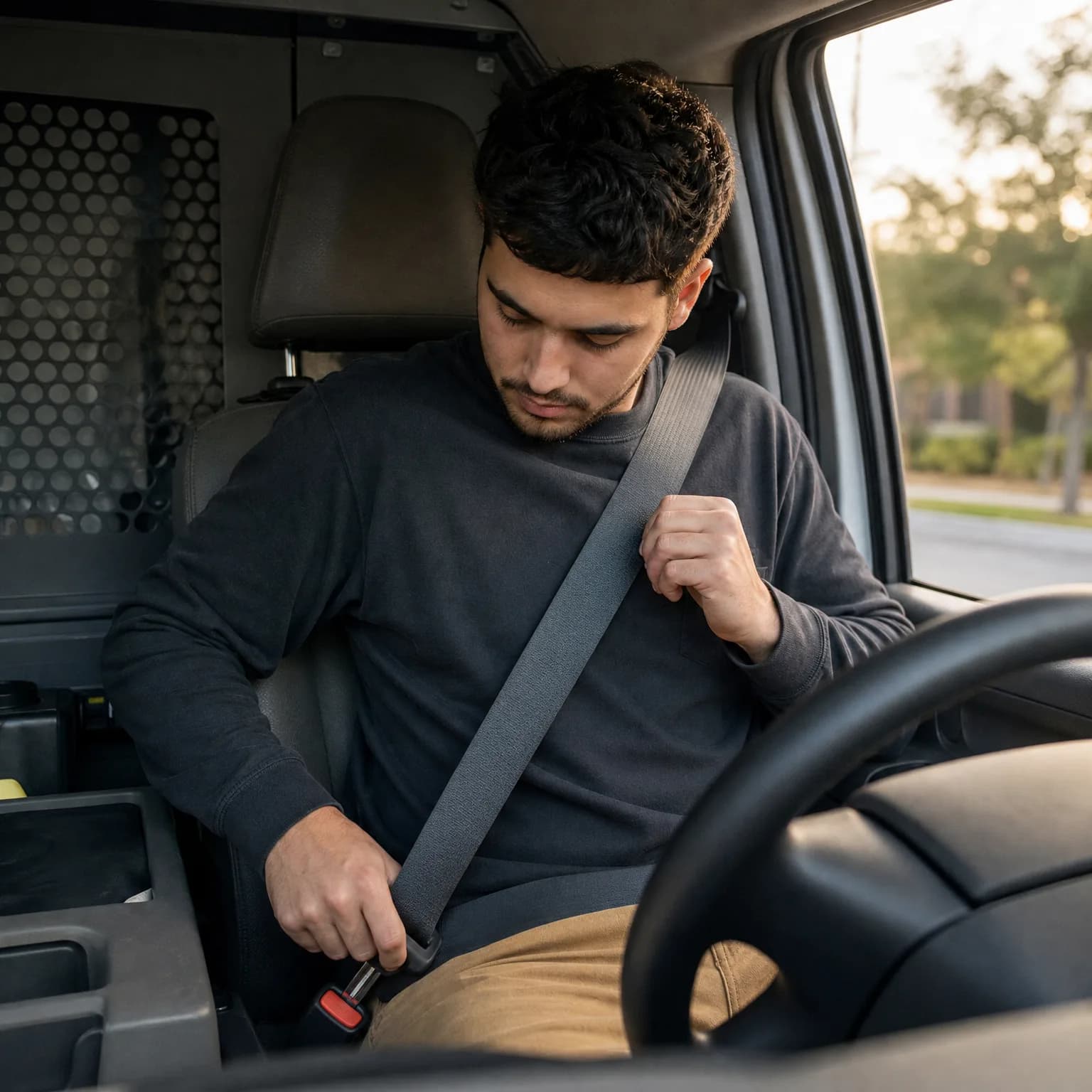
A non-owner FR-44 policy provides liability coverage when you drive a borrowed vehicle, a rental car, or any vehicle you do not own or regularly use. The carrier files Form FR-44 with DHSMV on your behalf within 24 hours of policy binding. DHSMV receives the filing electronically and clears the insurance-related suspension hold, allowing you to proceed with reinstatement once all other conditions are satisfied.
The policy does NOT cover any vehicle titled in your name or any vehicle you drive regularly—such as a family member's car you use daily for work. If you acquire a vehicle during the FR-44 filing period, you must convert to a standard owner policy or add the vehicle to your non-owner policy as a listed vehicle. Failure to do so triggers a lapse notification to DHSMV, which reinstates the suspension immediately.
Florida requires FR-44 filing for three years from the reinstatement date for first-offense DUI convictions. Second or subsequent DUI offenses may extend the filing period. The three-year clock does not pause if you let the policy lapse—any lapse triggers immediate re-suspension, and you must refile and pay reinstatement fees again.

When Your Cause Triggers Standard SR-22 Instead of FR-44
If your suspension stems from driving without insurance under Florida Statutes § 324.0221, insurance lapse while a vehicle was registered in your name, or accumulation of points unrelated to alcohol or drugs, DHSMV requires standard SR-22 filing—not FR-44. The SR-22 certificate proves you carry Florida's minimum liability coverage: $10,000 property damage and $10,000 PIP.
Non-owner SR-22 policies for these causes typically cost $40–$70/month. The filing period varies by cause: first-offense insurance lapse suspensions require three years of SR-22 filing from reinstatement. Subsequent lapses within three years can extend the filing period or elevate reinstatement fees to $250 or $500 depending on frequency.
The filing process is identical to FR-44. Your carrier submits Form SR-22 to DHSMV electronically. DHSMV clears the insurance hold. You pay the $45 base reinstatement fee plus any lapse-specific fees, then proceed with reinstatement. The difference is coverage floor and cost—SR-22 policies require lower liability limits and cost roughly half what FR-44 policies cost because the risk profile associated with non-DUI suspensions is statistically lower.
How Business Purpose Only License Eligibility Interacts with Non-Owner Filing
Florida issues Business Purpose Only Licenses (BPOL) during certain suspension periods, allowing driving for work, school, church, medical appointments, and employer-required business purposes. First-offense DUI administrative suspensions impose a 30-day hard suspension before BPOL eligibility. Refusal suspensions impose a 90-day hard period. You cannot drive at all during the hard period—no exceptions.
Once eligible, you apply for BPOL through DHSMV. The application requires proof of FR-44 filing, proof of DUI school enrollment (for DUI-related suspensions), and $12 application fee. DHSMV reviews the application and issues the BPOL if all conditions are satisfied. Most applicants receive approval within 7–10 business days if documentation is complete.
You can secure non-owner FR-44 coverage before applying for BPOL—in fact, you must, because DHSMV will not process the BPOL application without proof of FR-44 filing attached. Carriers like Acceptance Insurance, Bristol West, Dairyland, and The General write non-owner FR-44 policies in Florida and can bind coverage and file within 24 hours. The FR-44 certificate satisfies the insurance requirement for both BPOL during suspension and full reinstatement after the suspension period ends.

Cover Your Filing Before You Own a Car Again
Get My Non-Owner SR-22 Quote
Why Non-Owner FR-44 Costs More Than Non-Owner SR-22
FR-44 filing requires $100,000/$300,000 bodily injury and $50,000 property damage liability. SR-22 filing requires only $10,000 property damage and $10,000 PIP. Carriers price policies based on the coverage floor they must maintain for the entire filing period—higher limits mean higher premiums even when no vehicle is attached to the policy.
The second cost driver is cause. DUI convictions signal higher actuarial risk than insurance lapse or points accumulation. Carriers writing non-owner FR-44 policies are pricing the probability that you will cause an accident during the filing period while driving a borrowed vehicle. DUI offenders statistically file claims at higher rates than non-DUI suspended drivers, and the mandated liability floor is ten times higher, so premiums reflect both risk profile and coverage floor.
Non-owner FR-44 policies in Florida typically cost $960–$1,800 annually, or $80–$150/month. Non-owner SR-22 policies for non-DUI causes typically cost $480–$840 annually, or $40–$70/month. Over a three-year filing period, total cost for FR-44 compliance ranges from $2,880 to $5,400. Total cost for SR-22 compliance ranges from $1,440 to $2,520. The filing requirement itself—FR-44 versus SR-22—is the primary cost differentiator, not the non-owner product structure.

What Happens If You Acquire a Vehicle During the Filing Period
If you buy, inherit, or are gifted a vehicle while your non-owner FR-44 or SR-22 policy is active, you must notify your carrier immediately and convert to a standard owner policy. Non-owner policies explicitly exclude coverage for vehicles titled in your name or vehicles you regularly use. Driving a vehicle you own under a non-owner policy voids coverage—meaning you are driving uninsured, which triggers a new suspension if discovered.
Most carriers allow mid-term conversion from non-owner to owner policies without penalty. The carrier adds the vehicle to your policy, recalculates the premium based on the vehicle's year, make, model, and your county, and continues the FR-44 or SR-22 filing without interruption. DHSMV does not require a new filing when you convert—the original filing remains active as long as the policy does not lapse.
If you delay notifying your carrier and DHSMV discovers the discrepancy—through a traffic stop, accident, or routine verification—DHSMV treats it as a lapse and reinstates the suspension. You pay reinstatement fees again, refile, and restart the filing clock. The consequence is severe enough that most carriers explicitly warn non-owner policyholders during the application process: notify us before you acquire any vehicle, or risk suspension.
Which Carriers Write Non-Owner FR-44 and Non-Owner SR-22 in Florida
Acceptance Insurance, Bristol West, Dairyland, and The General write non-owner FR-44 policies in Florida and can bind coverage and file within 24 hours. Progressive, Geico, and National General also write non-owner FR-44 but approval timelines vary by county and underwriting queue. Most carriers offer online quote tools; some require phone contact for non-owner policies.
For non-owner SR-22 (non-DUI causes), the carrier pool expands slightly. Progressive, Geico, State Farm, Nationwide, and USAA write non-owner SR-22 policies in Florida. Premium quotes vary by age, county, violation type, and filing duration. Comparing quotes from at least three carriers typically surfaces a $20–$40/month spread—meaningful over a three-year filing period.
All carriers file electronically with DHSMV via the Florida Insurance Tracking System. You receive a copy of the filed certificate within 24–48 hours of binding. DHSMV receives the filing simultaneously and updates your driver record. You do not need to submit the certificate to DHSMV yourself—the carrier handles transmission, but keeping a copy for your records is prudent in case of administrative discrepancies.
Frequently Asked Questions
Can I get non-owner FR-44 if I sold my car after the DUI conviction?
Yes. Non-owner FR-44 exists specifically for drivers who do not currently own a vehicle but need to satisfy Florida's FR-44 filing requirement. The policy provides liability coverage when you drive someone else's vehicle with permission and satisfies DHSMV's filing requirement for DUI-related suspensions.
Does non-owner FR-44 cover me when I rent a car in Florida?
Yes. Non-owner FR-44 provides liability coverage when you drive any vehicle you do not own or regularly use, including rental cars. The policy's $100,000/$300,000 bodily injury and $50,000 property damage limits apply to covered incidents while driving the rental.
What happens if my non-owner FR-44 policy lapses during the three-year filing period?
DHSMV receives an electronic cancellation notice from your carrier via the Florida Insurance Tracking System and reinstates your suspension immediately. You must purchase a new non-owner FR-44 policy, refile, pay the $45 base reinstatement fee, and restart the three-year filing clock from the new reinstatement date.
Can I switch from non-owner FR-44 to a standard owner policy if I buy a car?
Yes, and you must. Non-owner FR-44 policies do not cover vehicles you own. Notify your carrier before driving the newly acquired vehicle—they will convert your policy to a standard owner FR-44 policy, add the vehicle, recalculate the premium, and continue the filing without interruption.
Why does non-owner FR-44 cost more than non-owner SR-22 if neither policy covers a vehicle?
FR-44 requires $100,000/$300,000 bodily injury and $50,000 property damage liability—ten times higher than SR-22's $10,000 property damage floor. Carriers price policies based on the coverage floor they must maintain, and DUI-related suspensions carry higher actuarial risk than non-DUI causes, so premiums reflect both liability exposure and risk profile.
Do I need non-owner FR-44 during the hard suspension period before BPOL eligibility?
No. You cannot drive at all during Florida's 30-day (BAC suspension) or 90-day (refusal suspension) hard period—BPOL is not available, so FR-44 filing serves no purpose. Secure non-owner FR-44 coverage when you are ready to apply for BPOL, because DHSMV requires proof of filing attached to the BPOL application.
Can I get non-owner SR-22 instead of FR-44 if my suspension was for DUI?
No. Florida Statutes require FR-44 filing for all DUI-related suspensions—DUI conviction, implied consent refusal, or subsequent alcohol violations. DHSMV will not accept SR-22 filing as substitute. Only non-DUI causes (insurance lapse, points accumulation) permit standard SR-22 filing.
Related Articles

Florida Non-Owner SR-22 for Non-DUI Causes Explained
5/19/2026

Non-Owner FR-44 Costs in Florida: Premium Breakdown
5/19/2026

Non-Owner FR-44 Florida Multiple Violations Guide
5/19/2026
Non-Owner SR-22 vs FR-44: Which Filing You Need
5/19/2026

Florida Non-Owner SR-22: Filing Without a Vehicle
5/19/2026

Florida Non-Owner FR-44 After DUI: Limits & Filing Path
5/19/2026